

Unusual or ‘stupid deaths’ (according to Horrible Histories) will always pique our interest, and most recently, the grave of Hannah Twynnoy was to be my latest fleeting obsession. Hannah, who died in Malmesbury, Wiltshire in 1703 is best known for being the first person to be killed by a tiger in Britain. Probably not the claim to fame she was expecting, but we rarely get to choose our fate. Hannah’s grave also enjoys another exciting claim, being the first grave I’ve been able to buy depicted on a commemorative coaster.

Sitting in the churchyard of Malmesbury Abbey, her grave is relatively unremarkable in size and shape, being short, simple and covered in lichen. However, the verse adorning her grave is anything but ordinary.
In bloom of Life
She’s snatchd from hence,
She had not room
To make defence;
For Tyger fierce
Took Life away.
And here she lies
In a bed of Clay,
Until the Resurrection Day.

But how did Hannah die from a tiger attack in 18th century Wiltshire? Was she a circus act, an explorer, an eccentric artist with a home menagerie? Not quite.
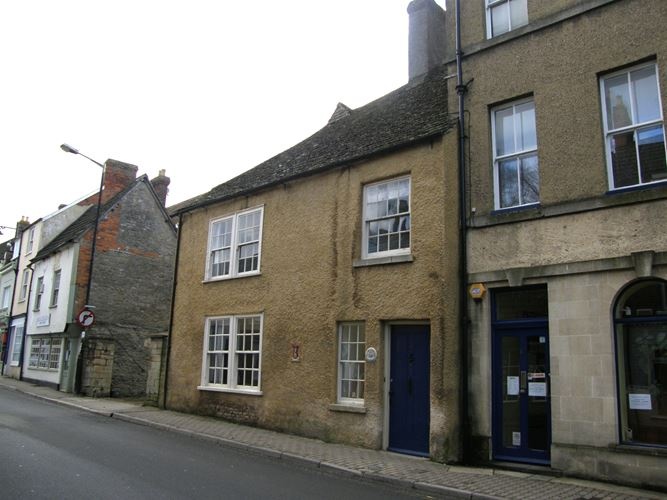
The exact nature of her death and why she was able to get so close to exotic animals is unclear, but can be roughly pieced together from centuries of local historians and oral tradition. Hannah Twynnoy was born in 1669/70 and was a servant working at The White Lion Inn in Malmesbury when a travelling menagerie came to town (the Inn at 8 Gloucester Street is now a private house). This menagerie – being a form of private travelling zoo – set up in the back yard of The White Lion, where visitors could marvel at animals they had never seen images of, let alone seen in person. While this ignorance made menageries good business for owners, and an exciting trip out for locals, it also bred ignorance, or a certain lack of fear.

We can’t be sure how long the menagerie had been in the inn’s yard, but Hannah was warned on several occasions, over multiple days, not to taunt the tiger. But Hannah couldn’t resist, she kept harassing the animal until one day, it snapped. We can’t ever know about the animal’s conditions or the safety of their cages or restraints, but the result was the same. The tiger pounced and mauled Hannah, and the 34-year-old did not survive the attack.

According to the research of historian John Bowen, a more detailed plaque recording the death of Hannah Twynnoy once existed in Malmesbury, well into the 19th century, but has since been lost or stolen. This plaque, once held within Hullavington parish church, read:
To the memory of Hannah Twynnoy. She was a servant of the White Lion Inn where there was an exhibition of wild beasts, and amongst the rest a very fierce tiger which she imprudently took pleasure in teasing, not withstanding the repeated remonstrance of its keeper. One day whilst amusing herself with this dangerous diversion the enraged animal by an extraordinary effort drew out the staple, sprang towards the unhappy girl, caught hold of her gown and tore her to pieces.[1]
According to other records within the Athelstan Museum, the menagerie keeper regularly told Hannah not to tease the animal, but after taunting it one time too many, it ‘pulled its fixing from the wall, caught hold of her clothing and “tore her to pieces”.
How Hannah ended up in Malmesbury, or how she was commemorated with such a detailed stone is somewhat of an enduring mystery. There are few records relating to Hannah’s family, and local Malmsbury records have been fruitless. However, its presumed that her burial within abbey grounds – unusual as a lone woman – and her headstone were paid for by a wealthy donor, or donated by the church.
Today, Hannah is something of an occasional local novelty, with the local Athelstan Museum utilising tiger-related content as a family friendly theme for many of their activities and public engagement efforts. A local street was named ‘Twynnoy close’ in 1993, and occasional school trips or events call for a short trip to Hannah’s grave. The Abbey gift shop sells postcards and coasters of her grave – both of which I purchased, obviously – which ultimately contributes to the upkeep of the churchyard and Abbey, albeit in a small way.

With the passage of time, its easy to look at Hannah’s grave as an example of ‘mess with the bull, get the horns’, or a funny reference for a kid’s TV show, but ultimately, she was still a real person who died a brutal death. I don’t think anyone should be reprimanded for smiling or enjoying the story and her grave, and I sincerely hope other burial sites provide grave-related home goods, but I can’t help but think that it’s a while since Hannah was humanised and regarded as a real person.
But all nuance aside, for God’s sake, don’t poke tigers. Let Hannah be a lesson.
***

Liked this post? Then why not join the Patreon clubhouse? From as little as £1 a month, you’ll get access to tonnes of exclusive content and a huge archive of articles, videos and podcasts!
Pop on over, support my work, have a chat and let me show you my skulls…
www.patreon.com/burialsandbeyond

Liked this and want to buy me a coffee?
To tip me £3 and help me out with hosting, click the link below!
https://ko-fi.com/burialsandbeyond
***
Further References/Fun Stuff:
Hannah Twynnoy on Horrible Histories (Stupid deaths – https://www.youtube.com/watch?v=PEprus6IpE8 )
References/Further Reading:
http://news.bbc.co.uk/1/hi/england/wiltshire/3207955.stm
http://www.thisiswiltshire.co.uk/news/1709606.malmesburys_tiger_woman_has_place_in_history/
[1]http://www.athelstanmuseum.org.uk/people_hannah_twynnoy.html
 Burials & Beyond
Leave a comment