
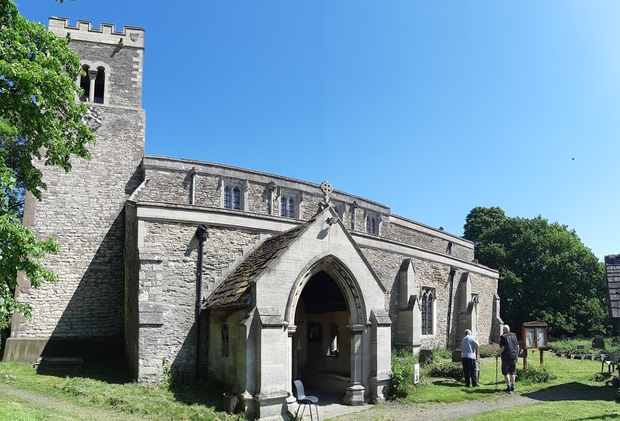
Today, we’re taking a wander round the Church of St Laurence in Corringham, not too far from Gainsborough in Lincolnshire.
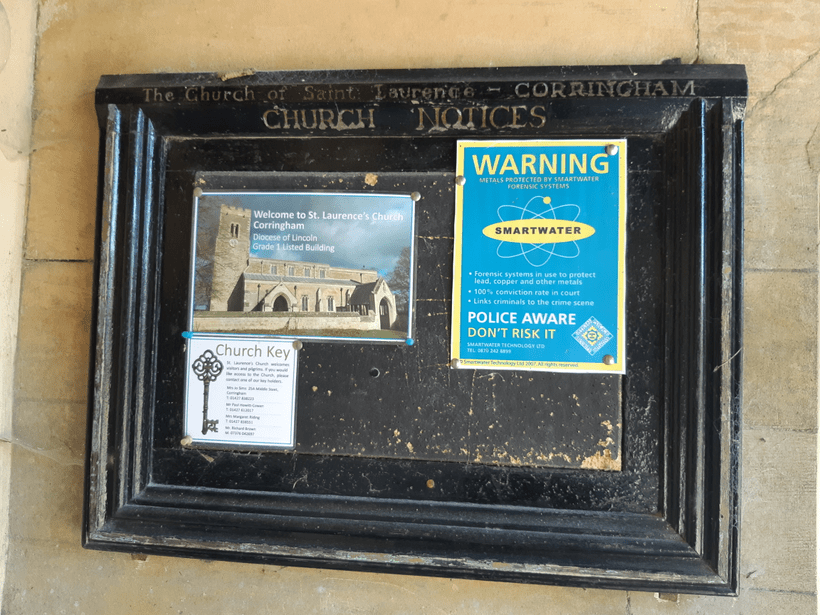
St Laurence is a grade II listed church with Saxon origins and is jam-packed with different architectural styles and treasures. Originally, a wooden church stood on this site back around the 10th century, when the tower was built to extend it. Sadly, the Danes came along and burned down this original wooden structure, but this ultimately allowed for some more sturdy rebuilding efforts.
The tower is constructed from Jurassic limestone from the Lincoln Edge, and also shows strange colour differences on the south and west faces. Its here, where some stones appear reddish-brown, that the remnants of the Dane’s fire can be seen. These scorch marks have remained in Corringham for over 10 centuries, offering a tangible window to the precarity and violence of Lincolnshire’s past.
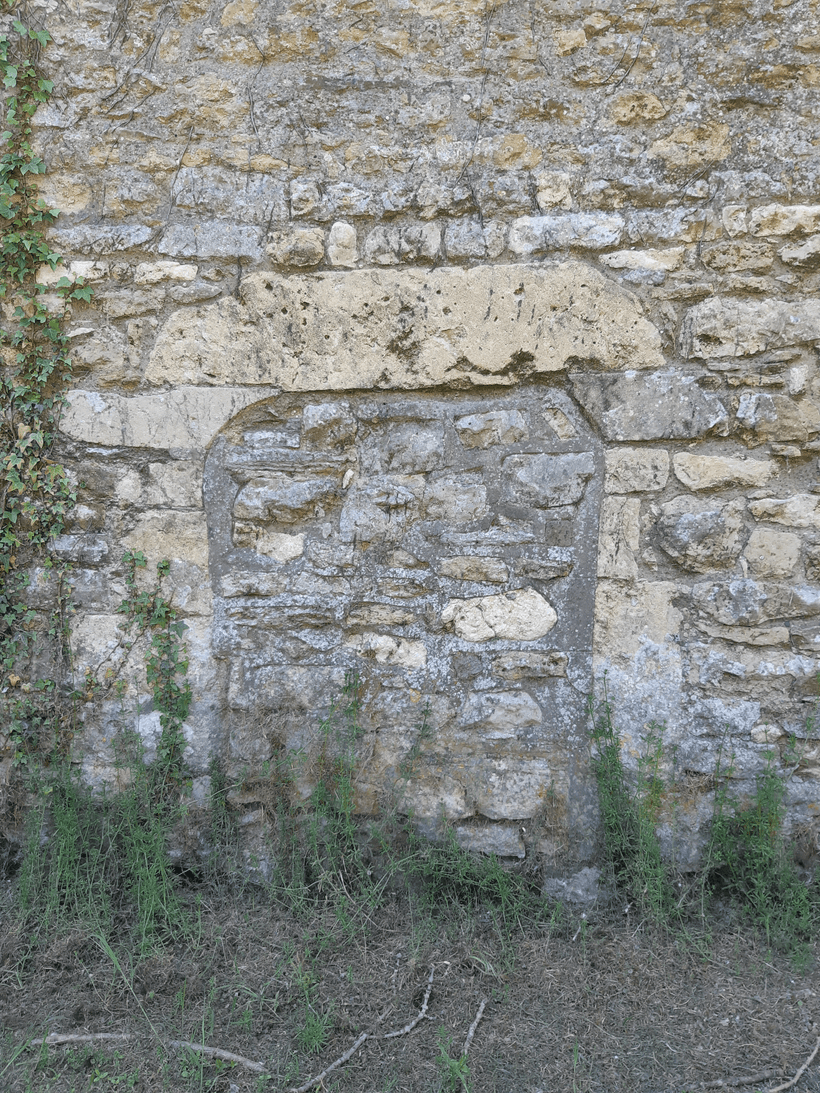
The Anglo-Saxon door way by the tower is long since bricked up, but the main entryway still bears some bold dog-tooth moulding, although this is a Victorian replica, rather than a Saxon revenant.
The font – and you know your girl loves a good font – was made by George Green of Gainsborough and was created especially for the Victorian renovations in 1849.
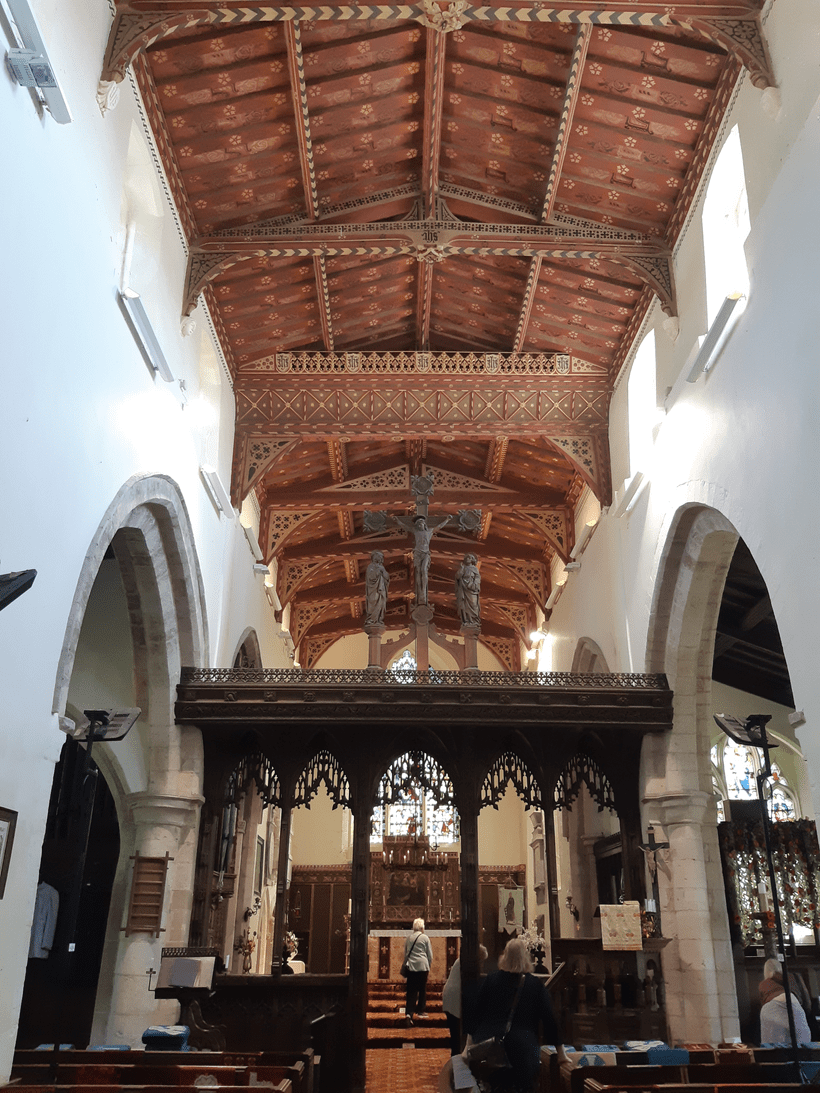

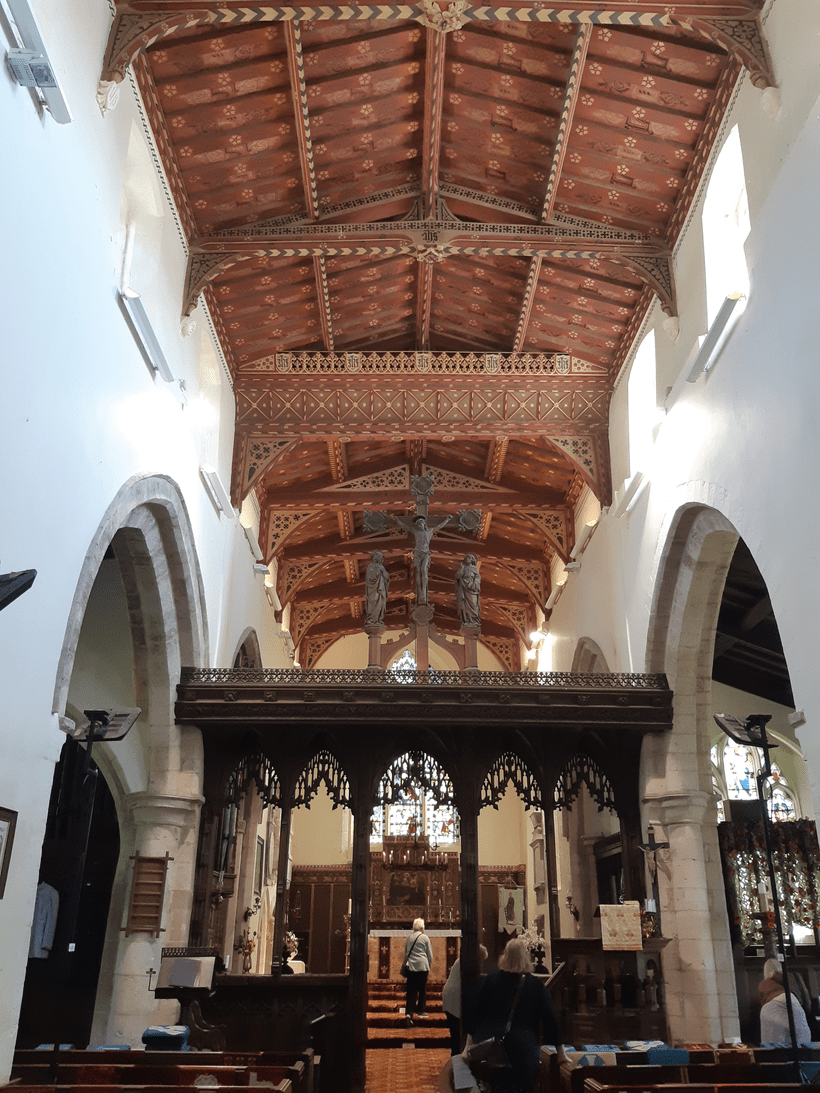
The church interior is a lovely mix of styles and ages; the north aisle is 11th century (enlarged in 14th), the Lady chapel is 13th century and the spectacularly jazzy ceiling is 19th century. The red decorated ceiling is both substantial and a real stunner. Created by G F Bodley in 1884, it features a repeating floral and ‘M’ motif, representing the Magnificat (a prominent and ancient Christian hymn). Beneath this painted delight is a large oak rood screen, topped with a carved wooden sculpture of the crucified Christ. Curiously, the base of the original rood screen was removed in 1565 and sold to local man Thomas Broxholme for 16 shillings. Amazingly, it was rediscovered in storage at the vicarage and re-installed in the church in 1884.
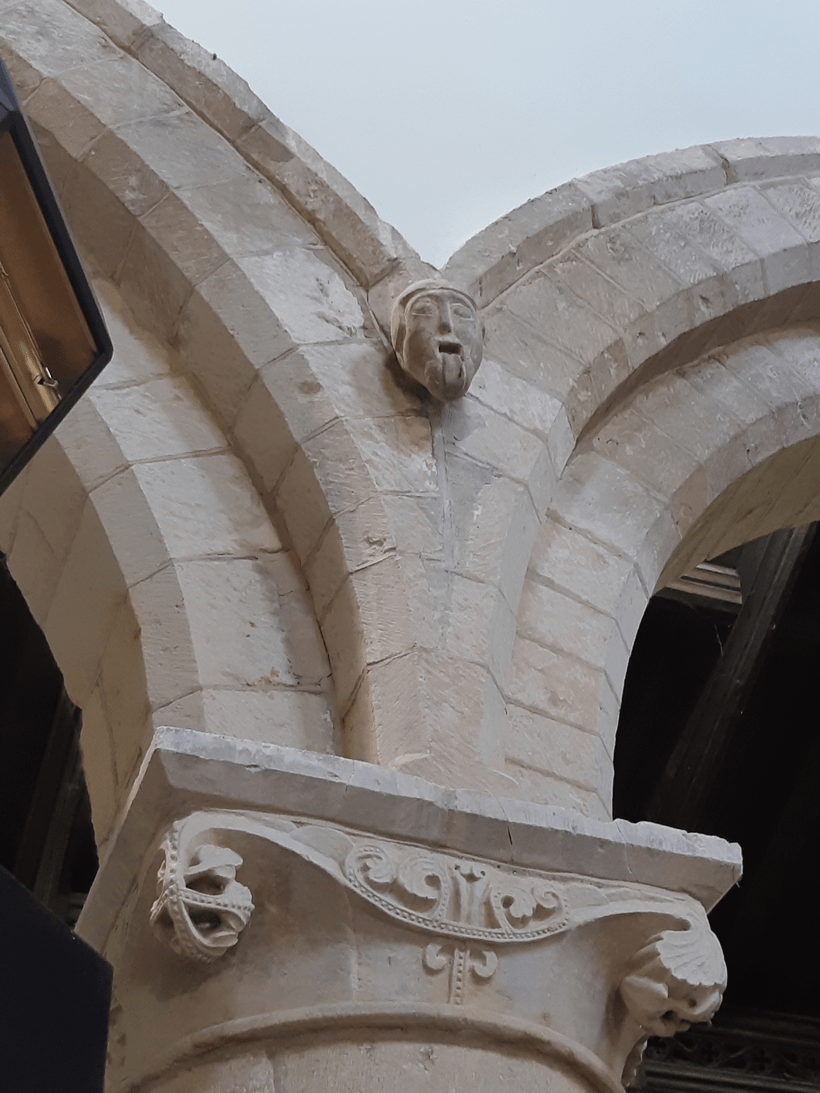
Scattered throughout the church are interesting corbels and decorative faces, peering out from between archways and columns. Many of these are ‘human head label stops’, which differ from corbels as – new fun definition – they are not load bearing, and are generally small pieces of decorative masonry at the end of a piece of moulding.
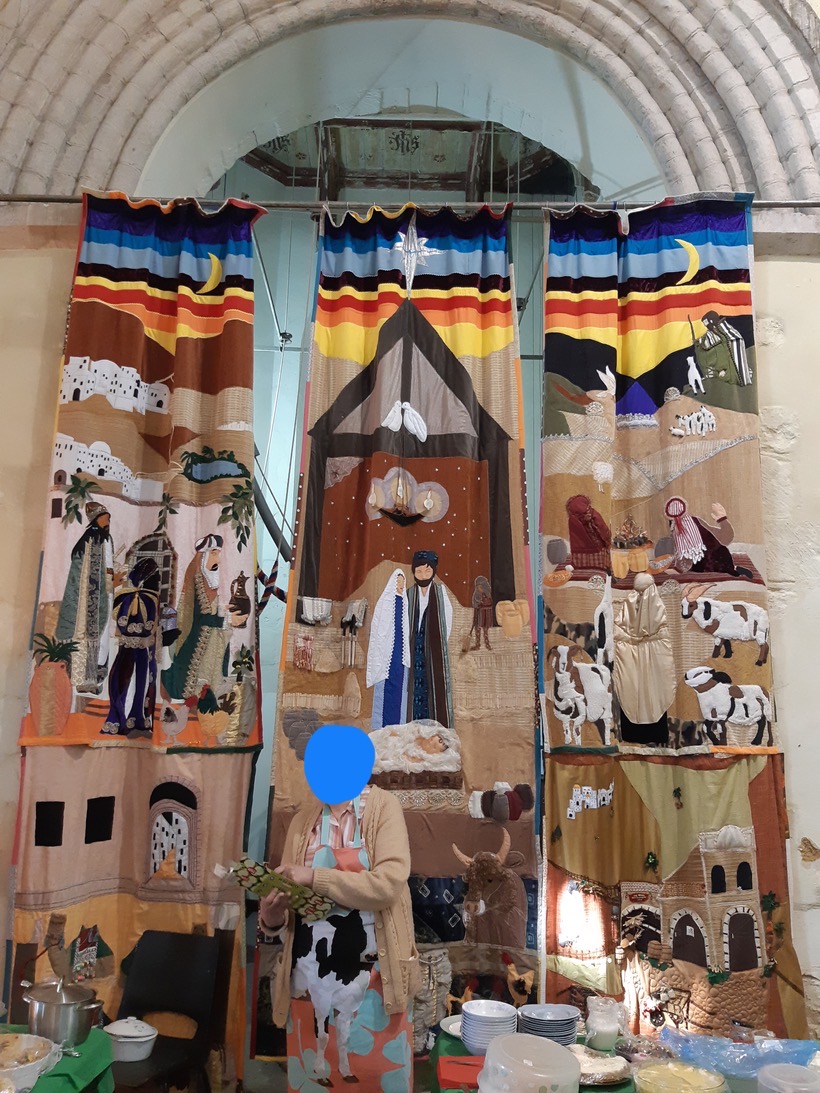
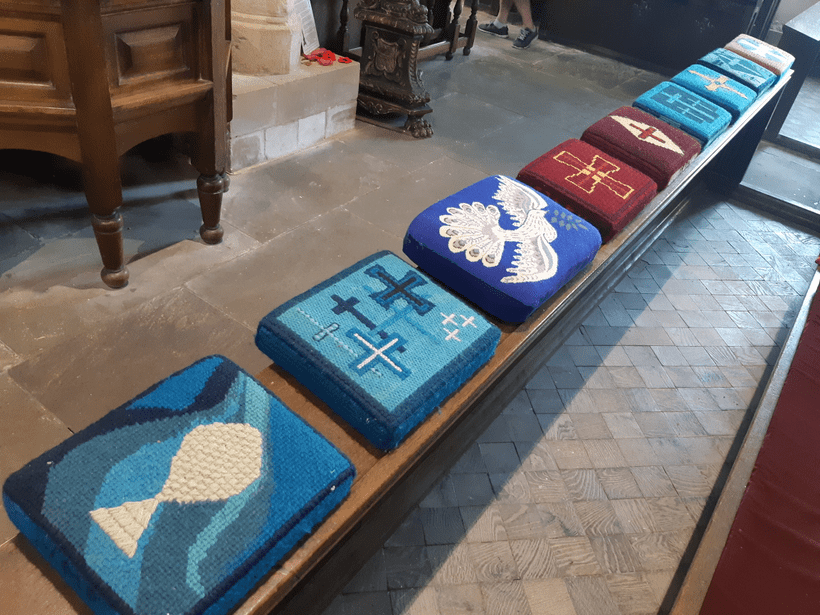
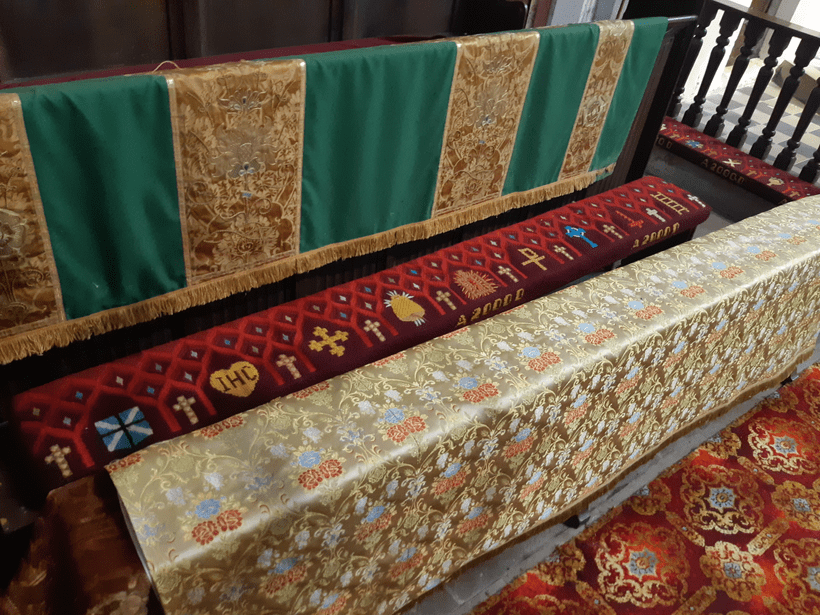
Not noted by any guidebook or online resource is this enormous applique’s triptych wall hanging-slash-curtain which had a rather 80s primary school nativity vibe to it. As an enormous fan of handicrafts, this was just as exciting to me as a corbel, and was a beautiful example of bright and functional art made within a living church. However, my visit was during a churches festival and a full view of this triptych was impossible… owing to a large amount of tea and cake. Tupperware aside, Corringham had several lovely examples of needlecraft, including some lovely, very 70s kneelers.
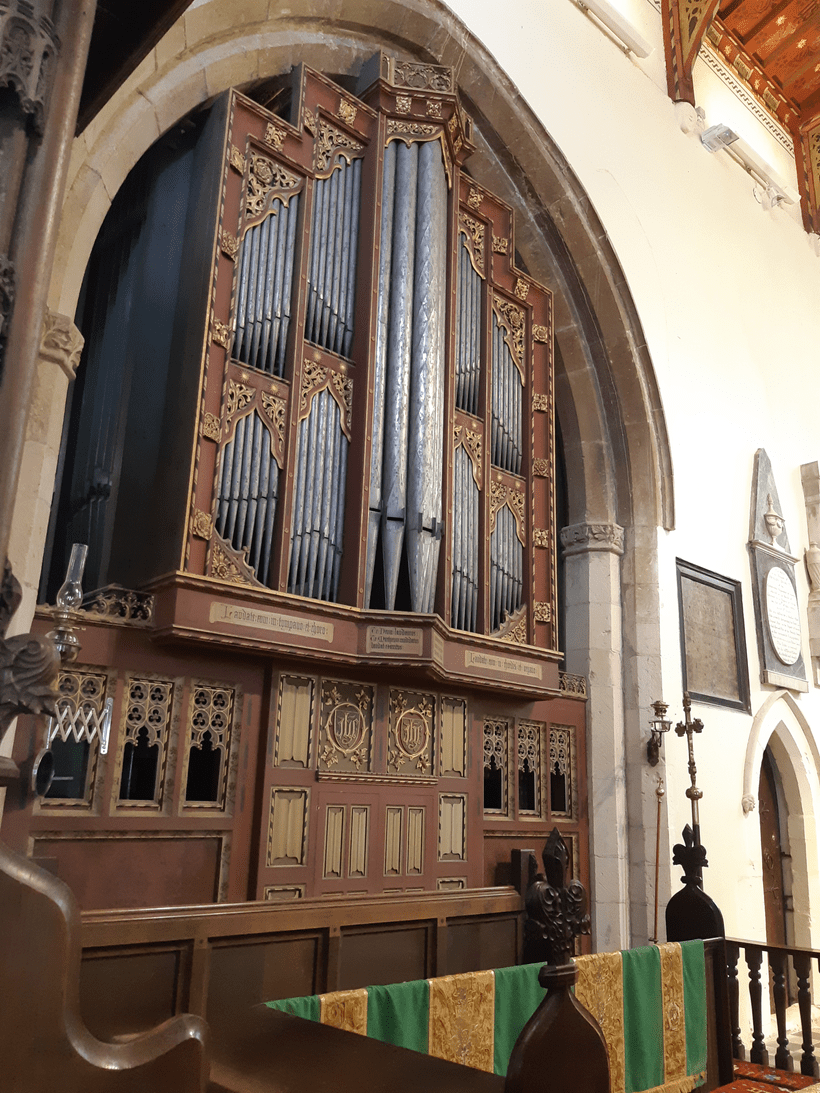
The church organ is perfectly recessed beneath an archway and has been richly decorated in a Victorian gothic style. Installed in 1884, the ‘case’ has been beautifully decorated in black and gold psalms and Latin verses. Much of the church’s fittings, including the organ, candelabrum, rood screen and reredos are all thanks to the 1882 restoration.


As for memorials, Corringham has a wide selection of styles and decorations. An Easter Sepulchre has been reused as a memorial space for the tomb of William de Gare (1277-1290), the Archdeacon of Lincoln. The wall memorials are a mixture of materials and ages – one far older metal memorial is in Latin and features a crest with three board heads (I’d presume the crest of Grimsby), but little information was available online and I didn’t have a stepladder with me to inspect it closer. Another plaque is so dark and discoloured from years of display, that it is all but illegible. However, after guessing that it was 17th century, a bit of internet snooping revealed that this is the memorial to 1628 Rev Canon Henry Clifford, vicar from 1609-1628. It’s topped with an engraving of him and his wife Elinor.


Alongside this plaque are 3 other Beckett memorials from the 19th century – Richard Beckett, John Beckett and the Rev. George Beckett, whose memorial is topped with a carved decorative likeness of a cross, chalice, bible and other religious ephemera.
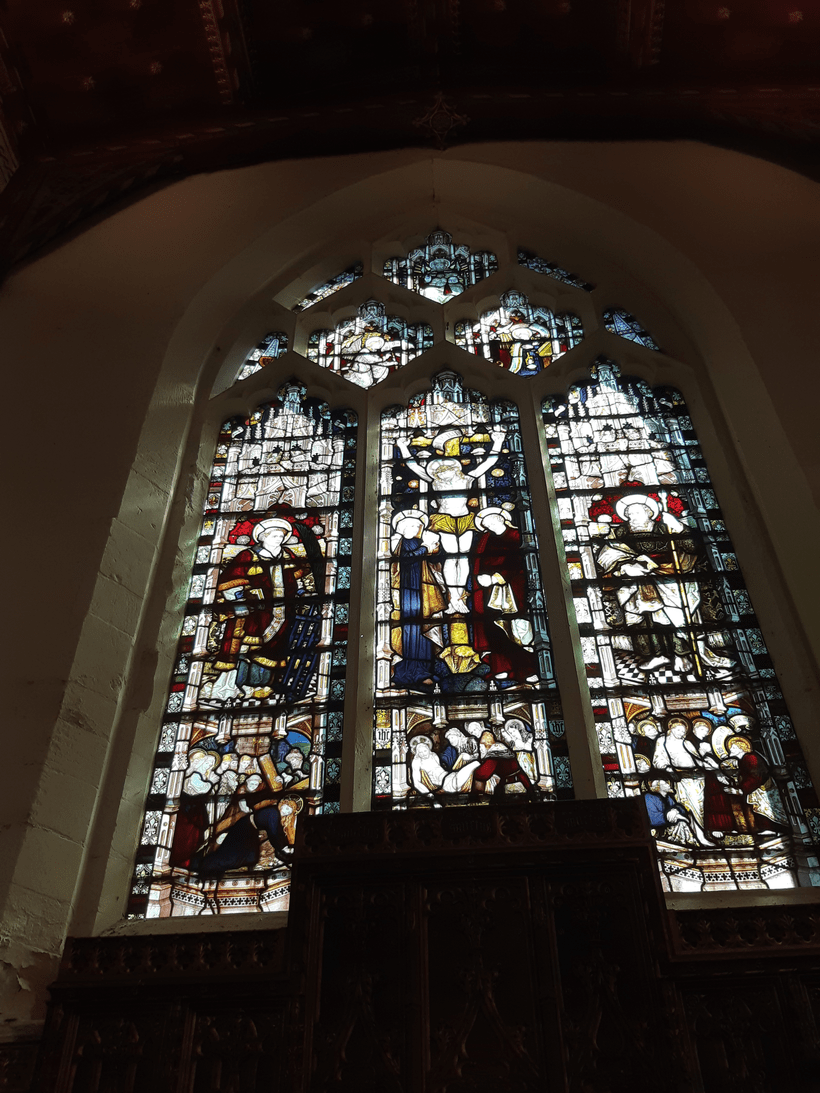
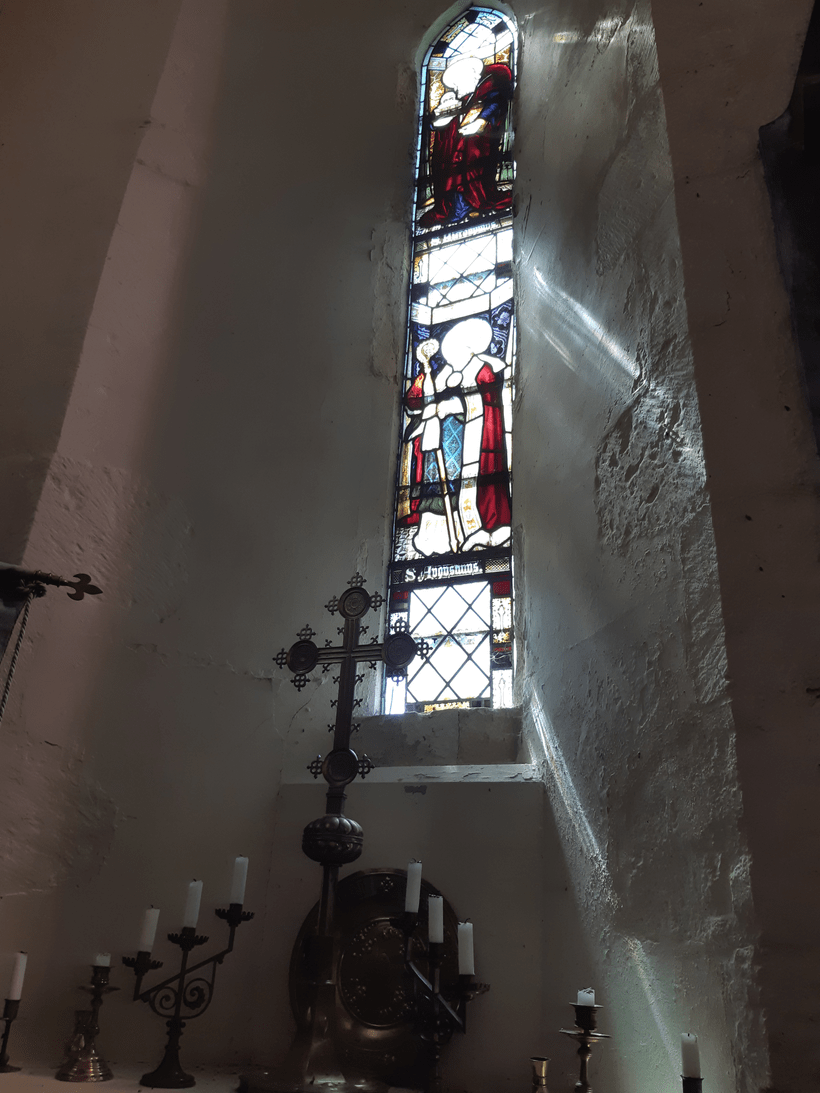

The church features a beautiful selection of windows, one of which is 13th century with decorative glass from 1878. Most of the glass was inserted during this period by C Kempe (1838-1907) and depict King David, Isiah and John the Baptist in one part of the church, while the north aisle’s perpendicular windows representing the Passion of Christ.
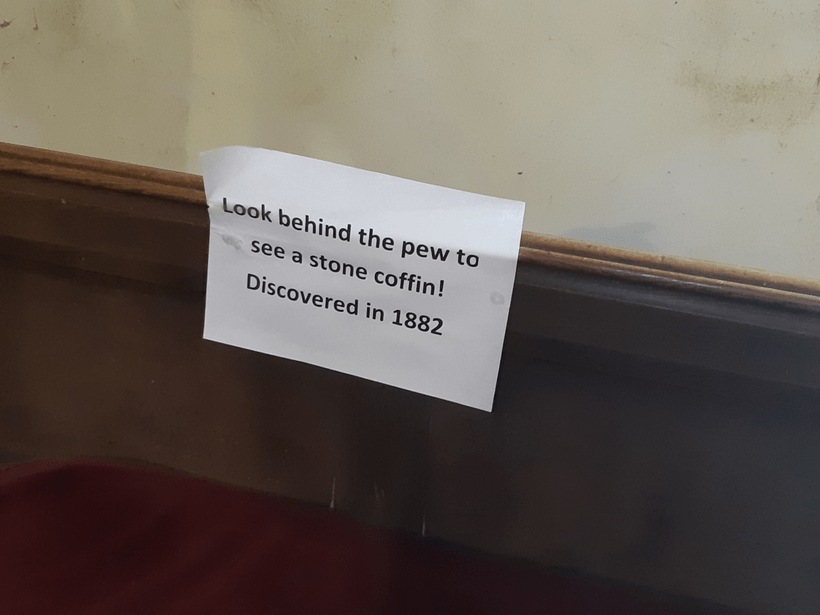

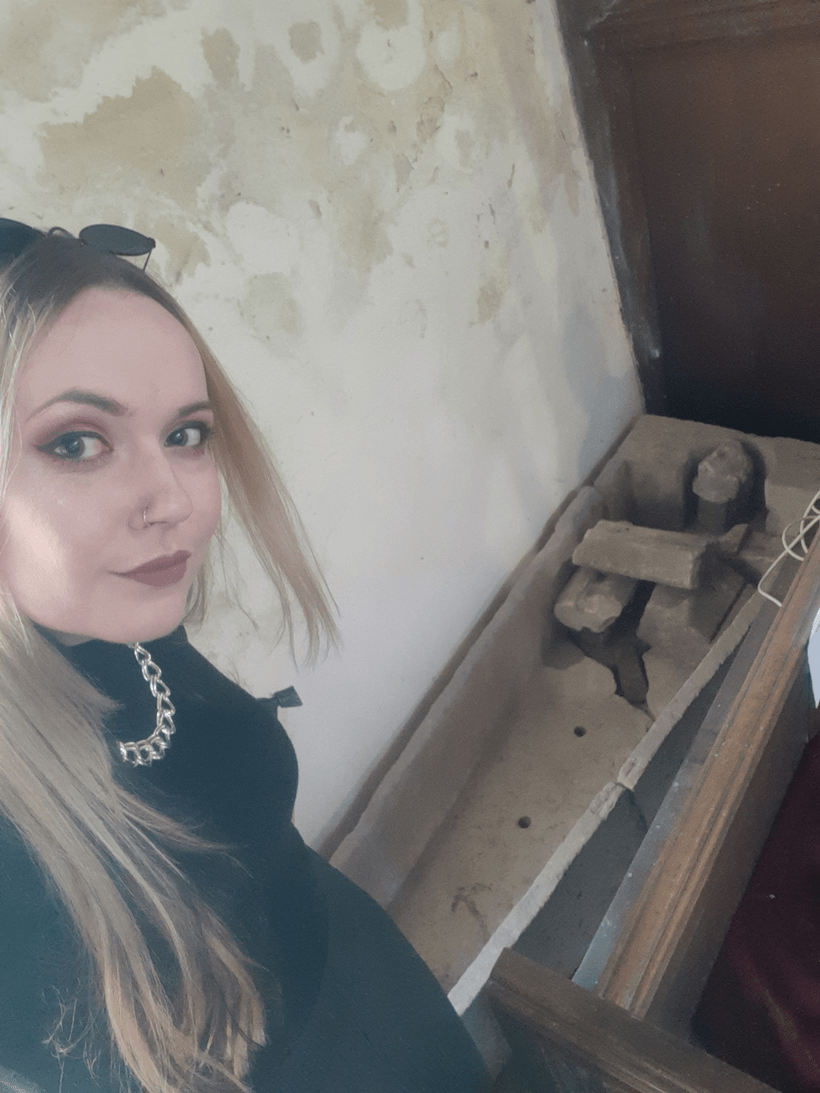
Windows and wood aside, the best church treasures are usually found covered in cords, or behind dodgy signage, and Corringham was no different. Behind a pew and a blu-tacked sign, was a large stone coffin. Discovered beneath the altar during 1882 restorations, this medieval coffin has no provenance and lives out its life as a nameless curiosity. While the coffin has some substantial damage, including a few nasty breaks across the whole body, it’s a lovely, thin and square example of an old form. Mainly used for nobility, clergy and people of standing, it was a functional method of burial, as circular holes in the bottom offered a means of drainage for the decomposing body.
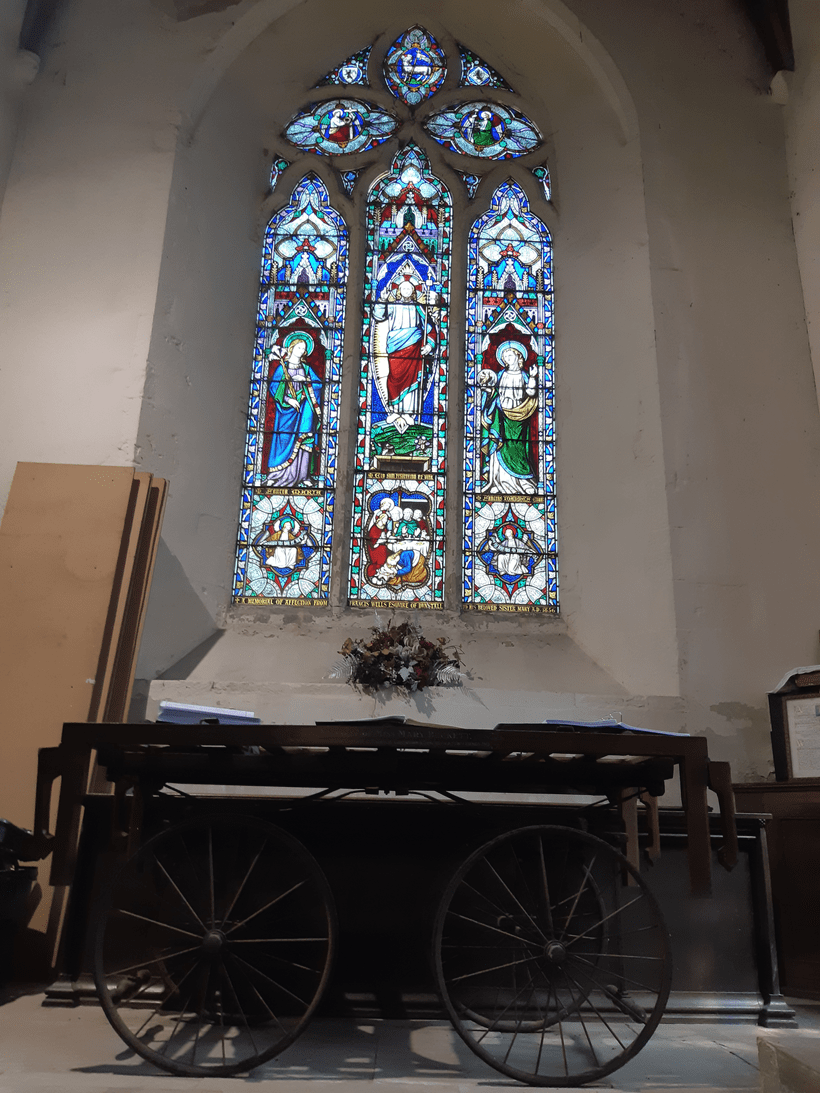

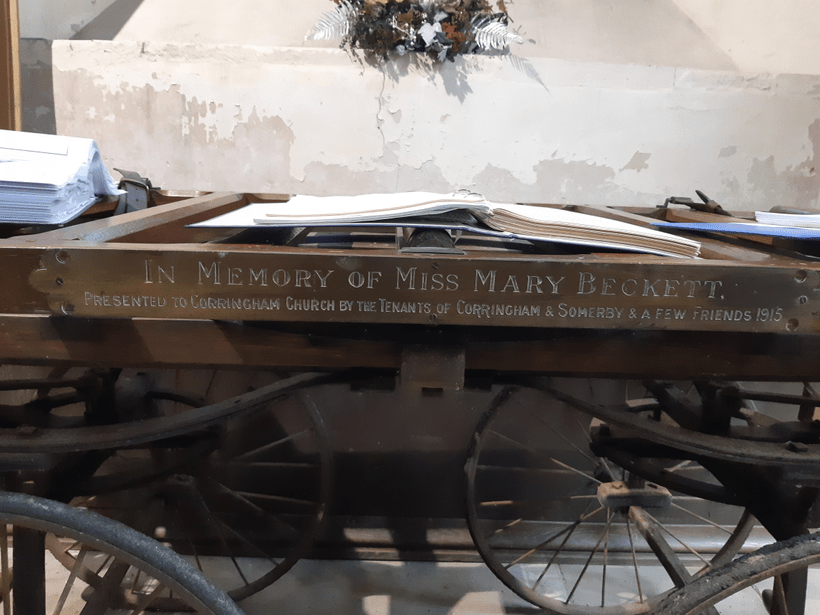
In other death-related treasure hunting, the old parish bier was on display, used as a table to display an array of binders, filled with local history and parish records. There was no other information on display, save for the brass plaque reading ‘In Memory of Miss Mary Beckett, Presented to Corringham Church by the Tenants of Corringham and Somerby and a few friends, 1915’. Biers were wooden carts, used as hearses for centuries – the coffin would be placed on top and wheeled to the graveside, ready for burial. Naturally, many ended their lives on the scrapheap, so to see any complete example in a church building today is always a real joy.
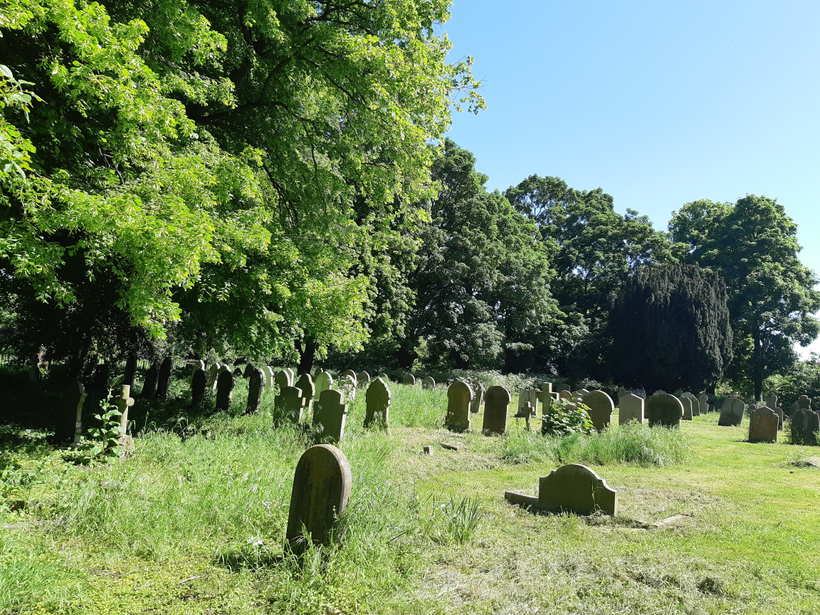
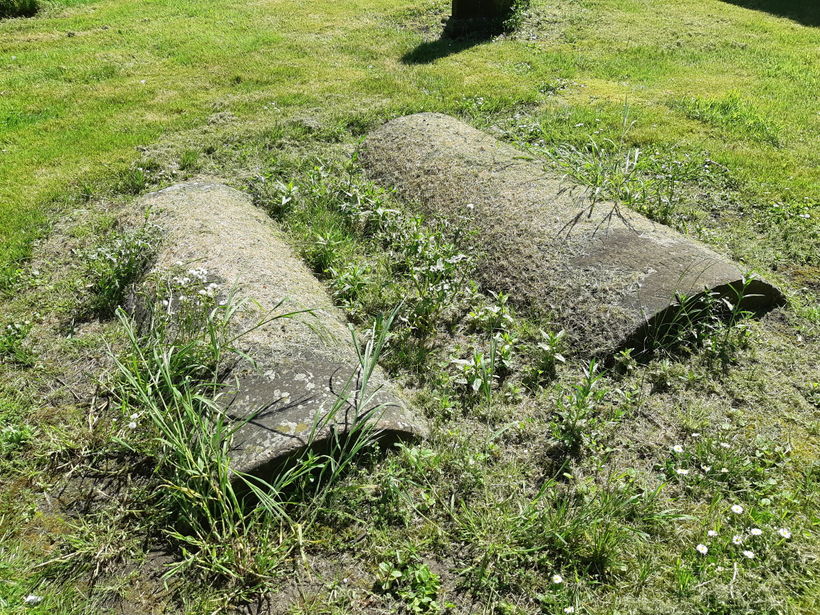
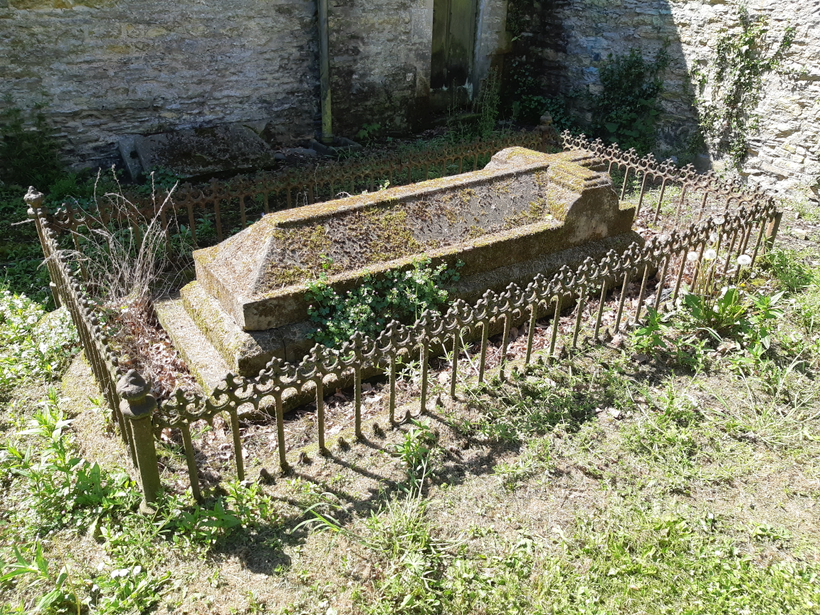


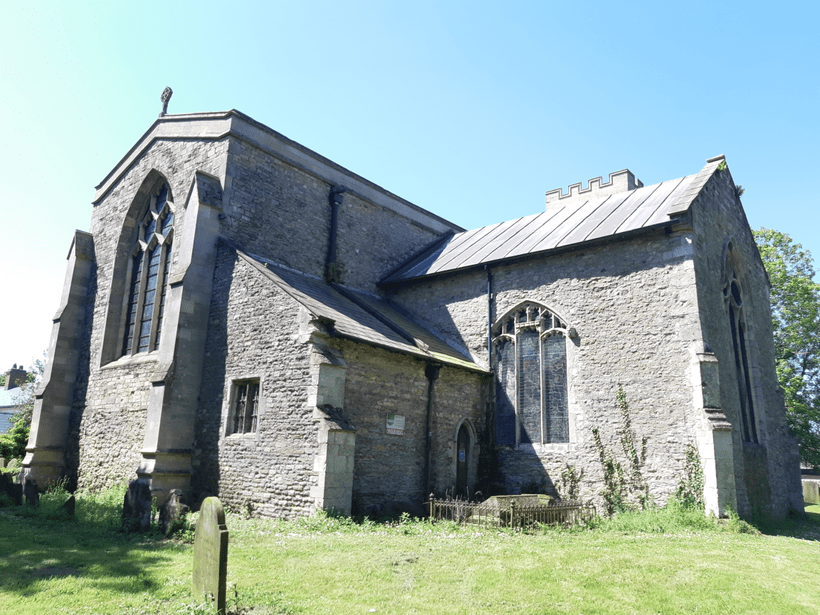
Sadly, I couldn’t do my usual thorough graveyard snoop, owing to a rather hefty bee population, but what I did see was a nice selection of predominantly late Victorian and 20th century graves. Some of my favourites were those that had retained their original ironwork, especially a substantial cross tomb that was surrounded by rows of tiny iron crosses – delightfully gothic!
I can think of few better things than visiting churches on a warm summers day with a tiny dog and cup of tea in hand.
***

Liked this post? Then why not join the Patreon clubhouse? From as little as £1 a month, you’ll get access to tonnes of exclusive content and a huge archive of articles, videos and podcasts!
Pop on over, support my work, have a chat and let me show you my skulls…www.patreon.com/burialsandbeyond

Liked this and want to buy me a coffee?
To tip me £3 and help me out with hosting, click the link below!
https://ko-fi.com/burialsandbeyond
***
https://historicengland.org.uk/listing/the-list/list-entry/1064162?section=official-list-entry
https://www.nationalchurchestrust.org/church/st-laurence-corringham
https://www.flickr.com/photos/52219527@N00/8232386201/in/photostream/
 Burials & Beyond
Leave a comment