

In the middle of a field, surrounded by enormous cows, sits a tiny white grave encircled in black fencing. This is the grave marker of Robert Snooks, the last Englishman to be hanged for highway robbery back in 1802.
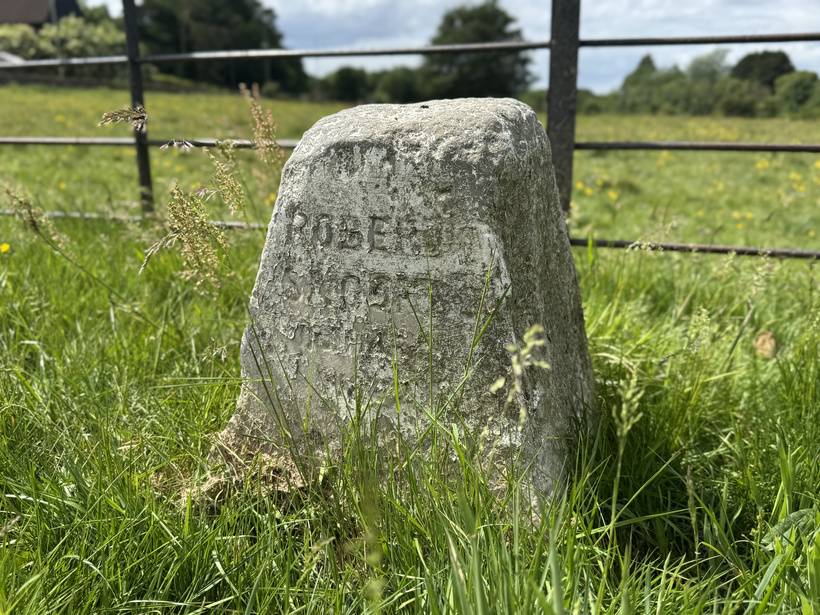
Getting to Snook’s grave is no easy task and, in my case, involved running across a busy road and trying desperately not to scream as your fear of cows becomes a horrifying reality. However, Snook’s grave is worth the terror. Unlike Dick Turpin who was romanticised to the point of sensational fiction in the 19th century, Robert Snook received no such accolades.
Born as ‘James Snook’ in Hungerford, Berkshire, the infamous Robert Snook became a familiar pain in the backside to the people of Hertfordshire before he finally met his grim end. Snook had been a petty criminal for many years, slowly increasing the severity of his crimes and making quite the name for himself amongst the local populous. He was well known as a robber, which may have influenced his nickname of ‘Robert’ as ‘Robber’ sounded rather similar. Nonetheless, Robert was a local criminal, known for his wicked ways, and locals wanted him gone. He’d dodged the long hand of the law many times, including avoiding a sentence for horse theft, but that was until the one day he overstretched himself and sealed his own fate.

On Sunday 10th May 1801, a post boy was travelling between Tring and Hemel Hempstead with several large bags of post, which included letters and bank notes totalling a hefty sum (some quote hundreds, others estimate the total as sitting around £80). Snook could have fled the scene of the crime and lived the life of Riley had he not made a few simple, foolish, mistakes.
Firstly, he left evidence at the scene of the crime. Snook had been witnessed riding locally with a saddle bearing a broken girth strap; the same saddle he foolishly left behind. Snook was known locally as having briefly worked as an ostler, or saddle boy at an inn, and so would have known the unfortunate post boy’s route long before the attack. He had also taken his ill-gotten-gains to other businesses, where his carelessness tripped him up once more. Attempting to buy cloth from a servant girl, he accidentally passed her a £50 note instead of £5; quite a staggering difference in 1801, and one that marked him out as suspicious.
A reward of £200 was presented to the public (alongside the original Governmental £100 reward) for Snook’s capture, and with such big rewards, his days were always going to be numbered. Eventually, a post boy in Marlborough Forest spotted Snook and promptly grabbed him with the aid of his passengers. Upon his person was £200 in notes and some very fancy, very expensive pistols; he was banged to rights. Snook was promptly arrested and taken to Newgate prison to await his trial, but things weren’t to go to plan.
Ordinarily, the punishment for highway robbery was transportation to the colonies (largely modern day Australia), but the authorities were to make an example of him. After moving to Hertford Gaol,t he trial took place and Snook was deemed the lowest of the low by the magistrate. Snook was not a simple thief, but a persistent thorn in the side to authorities, and – they believed – a destructive force in England at large. His crime was regarded as being ‘so destructive to society and the commercial interests of the country’ that he couldn’t be allowed to go free, even to the colonies. Instead, Snook would hang.
Snook was taken to be hung at the scene of his crime on common ground, partly as a grim tradition of crime deterrence and partly as public spectacle. Thousands of people attended the field to watch Snook hang, but he was in no rush. It was said that while Snook enjoyed one final drink with a friend, he commented that ‘Its no good hurrying – they can’t start the fun until I get there!’
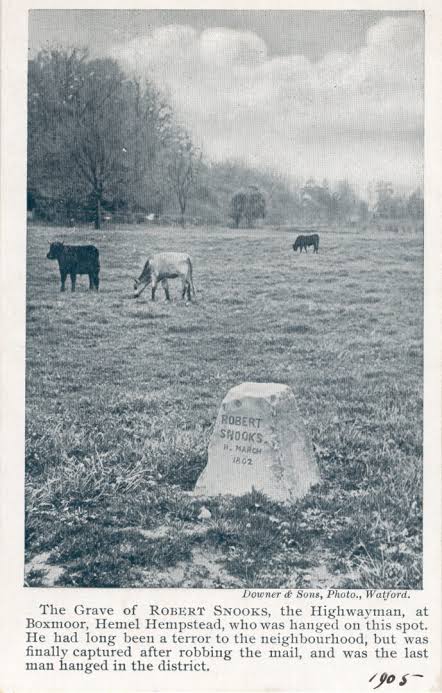
Snook was hung close to the spot of his robbery, and promptly buried nearby. The day afterwards, he was disinterred, placed in a coffin and reburied with little ceremony. It wasn’t until 1904 that Snooks gained the simple headstone we see today, when the Box Moor Trust erected a simple memorial close to the place they estimate his remains are buried.
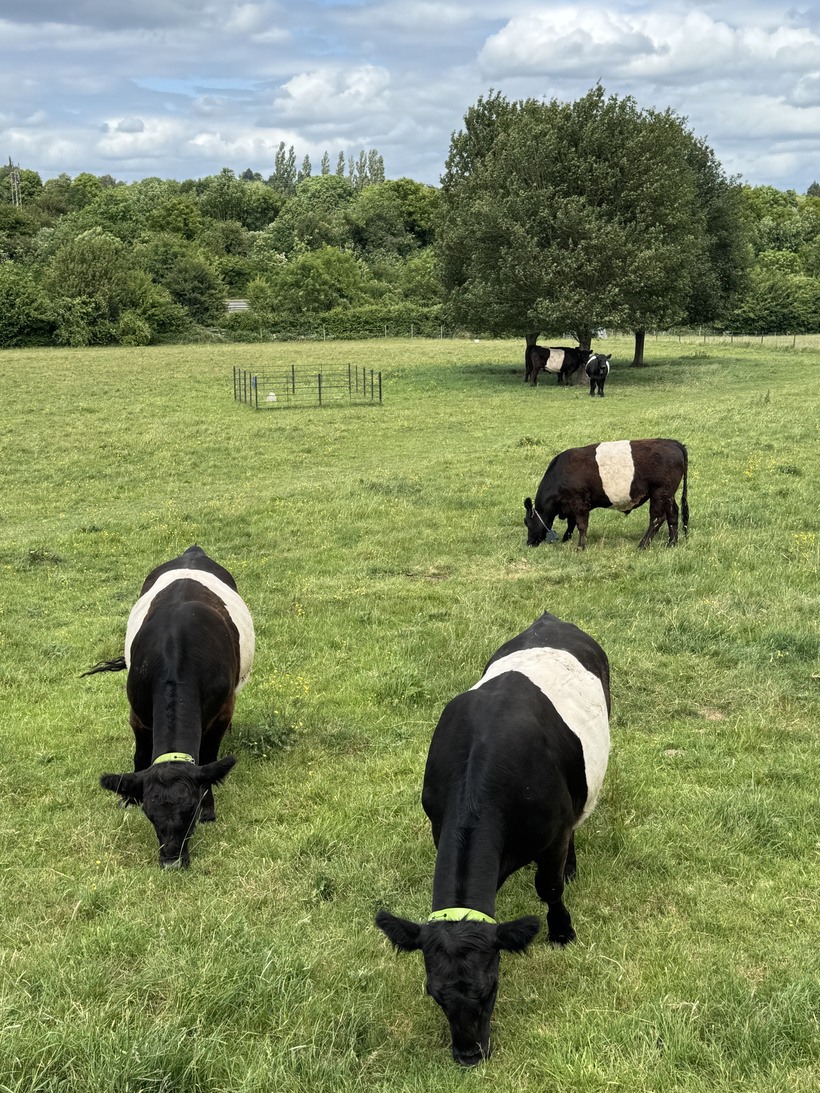
Today, visiting Snook’s grave is a tricky but not impossible task. With no parking nearby – save for a charity shop donation centre – the trip involves a bit of walking and a desperate creep across a field of cows. While I was assured they ‘probably’ wouldn’t hurt me, their buzzing proximity collars and reticence to leave me alone didn’t make for the most calming experience. So, in short, visit Snook, history is sad and bloody, and pack your running shoes.
***

Liked this post? Then why not join the Patreon clubhouse? From as little as £1 a month, you’ll get access to tonnes of exclusive content and a huge archive of articles, videos and podcasts!
Pop on over, support my work, have a chat and let me show you my skulls…www.patreon.com/burialsandbeyond

Liked this and want to buy me a coffee?
To tip me £3 and help me out with hosting, click the link below!
https://ko-fi.com/burialsandbeyond
***
 Burials & Beyond
Leave a comment