

In an incident that became known as ‘the Bealings Bells’, the house of Major Edward Moor was besieged by months of mysterious bell ringing in 1834. Now regarded as the work of a poltergeist – or a perturbed servant – the incidents in Suffolk made newspaper headlines, and eventually became the basis of an entire book by the Major himself.
The strange occurrences began on the 2nd February 1834 when the Moor family were sitting in their grand Georgian house at Great Bealings, and were suddenly confused by a series of servants’ bells. The kitchen was rigged with a series of bells, each rigged with a wire leading to a different part of the house as a means of summoning servants; rather ordinary fare for a grand house at the time. No-one was in the kitchen to ring the bells, nor was a servant intended to be summoned, but all of a sudden, the bells began to jingle. The family were confused, but thought nothing of it, dismissing it as a silly joke, until the bells began to jingle again a few hours later. Sporadically, throughout the days, the bells would ring of their own accord, and the Major was baffled.

Searching for answers, he penned a letter to the local paper, the Ipswich journal:
“A circumstance of an unaccountable nature has recently occurred in my house … On 2nd inst. returning from the afternoon service I was told the dining room bell had been rung three times, at intervals, between two and five o’clock. At this, the servants left in the house, a man and a woman, were surprised; no personal cause being perceptible, though sought.”
Although the servants were clueless as to the cause, Moor took up his pen and began an investigation of his own. At this time, Moor was a retired officer of the Indian Army and a Fellow of the Royal Society with a long-standing interest in Hindu mythology. Aged 63, he was an established and respected scholar, with his book ‘The Hindu Pantheon’ highly commended by experts as his life’s masterwork. He had moved to the grand house at Great Bealings in 1806 with his wife and children and had lived quietly, without incident ever since…
He was no fool, but was he a trickster?

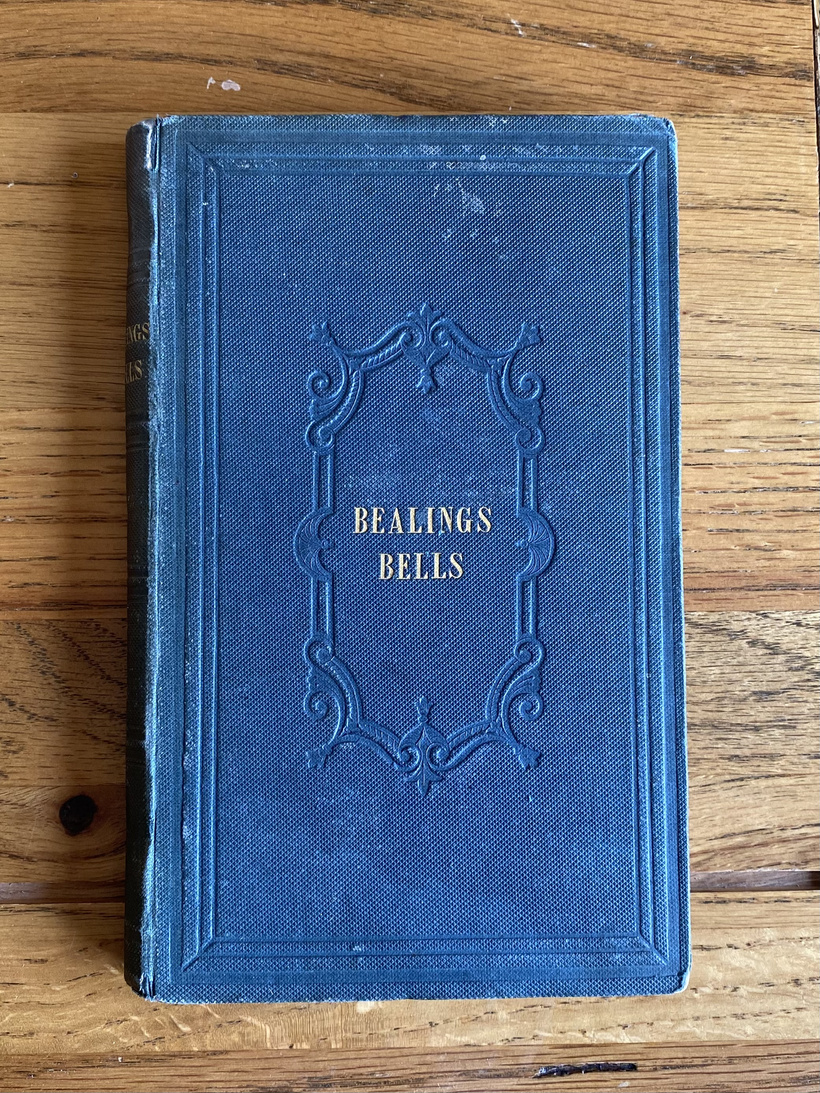
In Moors letter to the newspaper, he asked readers for suggestions of the cause, hoping to use any correspondence as a springboard from which he could launch his investigative efforts. The efforts were not insubstantial and resulted in the publication of ‘Bealings Bells: An account of the mysterious ringing of bells, at Great Bealings, Suffolk, in 1834; and in other parts of England: with relations of farther … unaccountable occurrences, in various places’ a not-so-snappily titled work that collected his own experiences with those of others.
The Major’s account of the bell-based haunting is well-documented by his own hand, leaving a timeline of events in his work.
Returning from church on 2nd February, he arrived home and was met by his servants who imparted the information that the bells had rung three times that day of their own accord, between two and five. Moor had quickly consoled his staff and reassured them that it was probably the work of birds on the outside wiring, and absolutely nothing to worry about.
That was until the same thing happened the very next day at the same times. Except this time, Moor was there to hear it all.
The next day, the Major returned home at about five o’clock, after the typical bell-ringing time had ended, only to hear that the kitchen bells had been violently ringing all day. Standing in shock at the escalating news, he heard the familiar ring of a bell from the kitchen. Rushing to meet it, he entered the room to find the cook aghast, who explained that of the seven bells installed, only the five bells to the right were ringing. These five bells were wired to the dining room, drawing room, bedroom and two attic rooms, all of which appeared interconnected by the bell system. As he stood pondering the silent bells, the five aforementioned bells began to ring, and ring violently. This time, the cook, Moor and Moor’s son all witnessed the ringing that was said to be so extreme that he feared they’d tear themselves from their brackets. However, the bells soon stopped, only ringing twice more that evening. At six o’clock that same night, Moor and his son were sat having dinner together when they heard a further system of bells ringing, five times, in ten minute intervals. Just before a quarter to eight, the ringing stopped for the night.
The next day, as sure as the sun rises, the bells began at eleven o’clock in the morning as Moor, his son, and grandson were eating a late breakfast together. Quickly rushing to examine the bells in the kitchen, he soon found those same five bells ringing. One of these bells finally rang so roughly and violently that it flew free from its hook and hit the ceiling . This same routine continued in a cyclical routine for well over a month until 27th March when the bells rang their last. Moor had spent days stood with his servants, watching every single crank pull and experimenting with wiring, even using garden tools to try and replicate the violent ringing heard in the kitchen. Moor and his family had little choice but to conclude that the whole affair was the work of supernatural intervention.
However, as with all things spectral, we have alternative theories. The first is that the whole affair was an elaborate joke by the servants themselves who delighted in exciting and scaring their masters with a few simple pulls of strings. Alternatively, perhaps the whole tale was the concoction of Moor himself who wanted to inject a little excitement – and a smidge of infamy – into his retirement. He was clear enough in his written assessment, stating ‘I am thoroughly convinced that the ringing is by no human agency’, quickly pinning his ghostly colours to the mast. His book, although not a bestseller, could be seen as a satire of the new movement of proto-paranormal investigators who investigated curiosities with a sincerity that many found amusing. Whatever the truth, the Society for Psychical Research was clear on their view – the case of the Bealings Bells was a cut and dry example of a poltergeist. I mean, who needs motive or literally any other cause of spectrality when you’ve got the inconvenience of a few bells…?
***

Liked this post? Then why not join the Patreon clubhouse? From as little as £1 a month, you’ll get access to tonnes of exclusive content and a huge archive of articles, videos and podcasts!
Pop on over, support my work, have a chat and let me show you my skulls…www.patreon.com/burialsandbeyond

Liked this and want to buy me a coffee?
To tip me £3 and help me out with hosting, click the link below!
https://ko-fi.com/burialsandbeyond
***
 Burials & Beyond
Leave a comment