
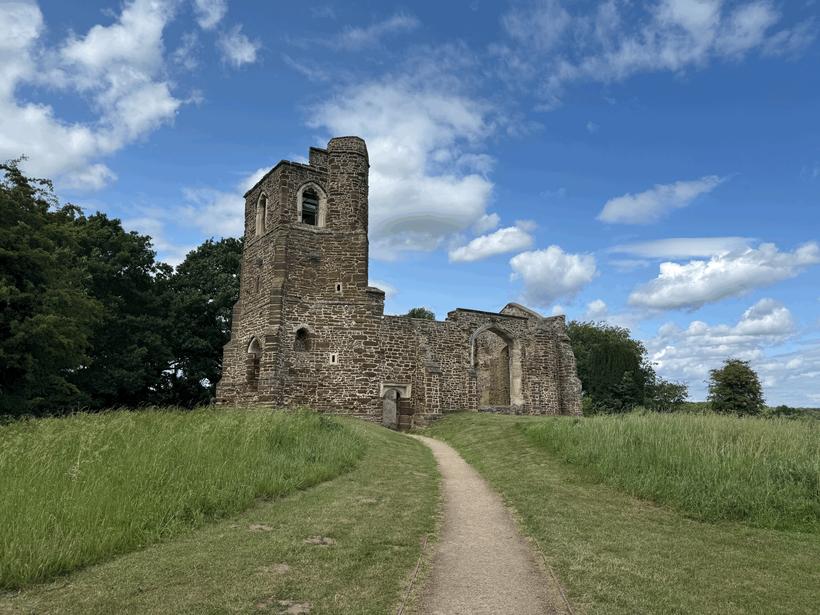
The Church of St Mary the virgin is reached by a long, thin gravel track that’s not ideal for big cars or blonde women in pointy boots that seemed like a good idea in the morning, but a terrible one by the afternoon. With foundations estimated to have been built around 1350, the church served the local rural community for centuries until the mid-19th century when the once-vibrant church became silent. There was no sudden secularism in Clophill, nor any decline in population, the church simply became too small for the locals’ needs. There had been several improvements made in the early 1800s, but it was clear that the building was at bursting point. When the rector died in 1843, his successor decided not to repair and extend St Mary’s, but build a larger church in the more convenient location of the village centre. This church remains intact today and is the primary church for the remaining, small, congregation. Back at St Marys, the use of the building was simplified once more and reduced to that of a mortuary chapel or dead house; a place for storing the deceased as the substantial churchyard was still in regular use.
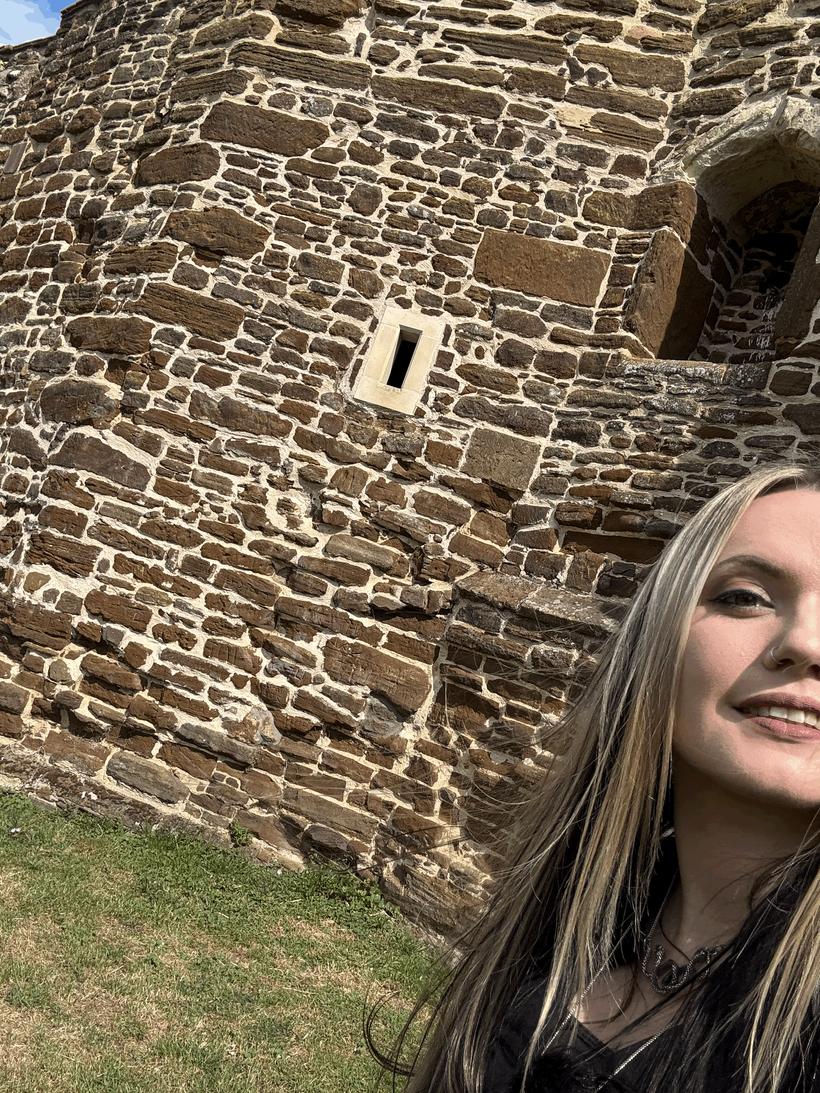
According to local legend, the isolated location of the church, and the frequency of unattended and fresh cadavers, led to St Mary’s being a prime location for body snatchers. However, this claim – recorded in 1908 – stated that ‘human bones’ were regularly disinterred, rather than fresh corpses. Considering that body snatchers sought fresh bodies to sell to local surgeons and medical schools, I’d be sceptical of any medical professionals paying good money for old bones. The churchyard was still in constant use until the new burial ground to the east of the churchyard was opened in 1896. However, according to an account in Clophill History, in a letter from 1904, the Rector Mr. Bosanquet told his nephew that ‘When we examined the ground where the old chancel stood, we found a heap of skulls altogether shewing that the remains had been disturbed and lead coffins probably stolen.'[1]
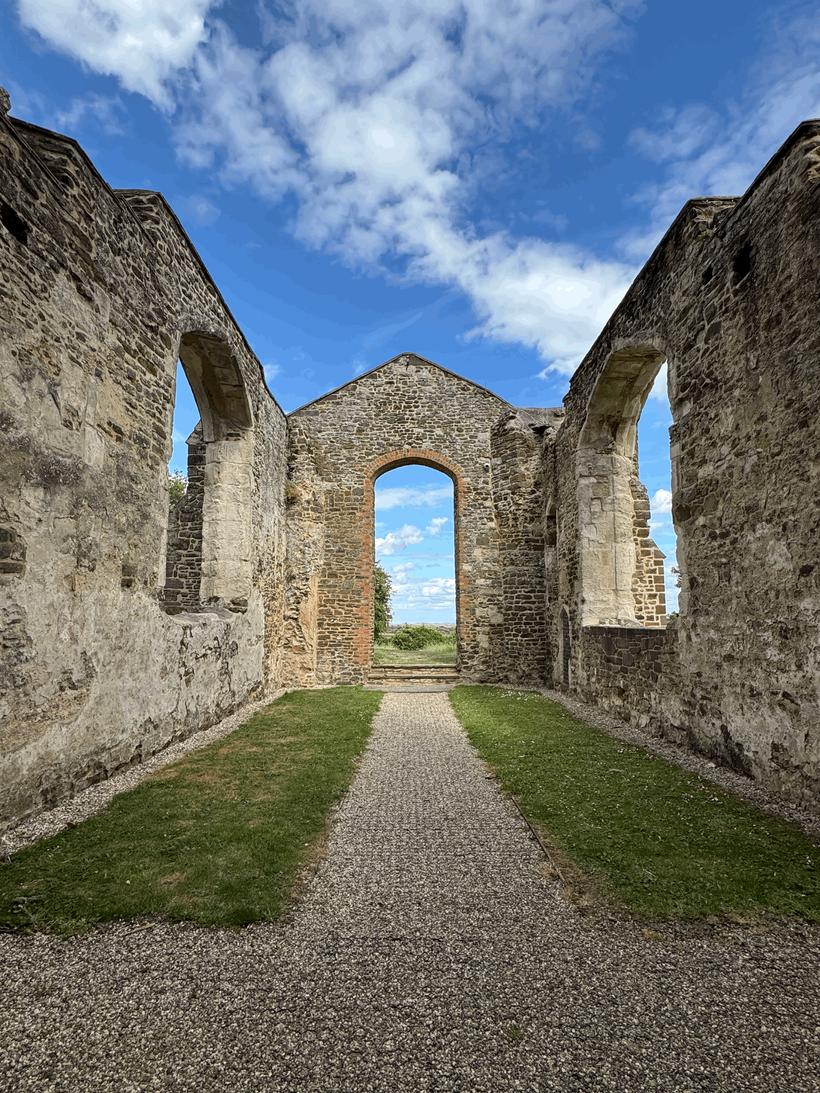
In just a few decades, the church was half demolished and completely abandoned, sitting as a lonely shell of its former self. The remaining church structure remained intact until the 1950s, when the inevitable blight of lead thievery resulted in the buildings complete abandonment. While it was the end of the church’s life as a structure of God, it was about to become synonymous with something far darker.
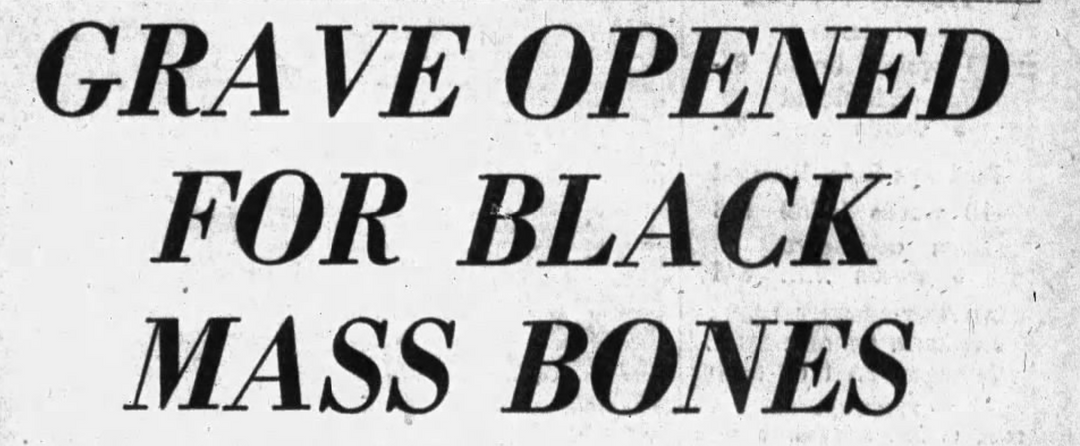
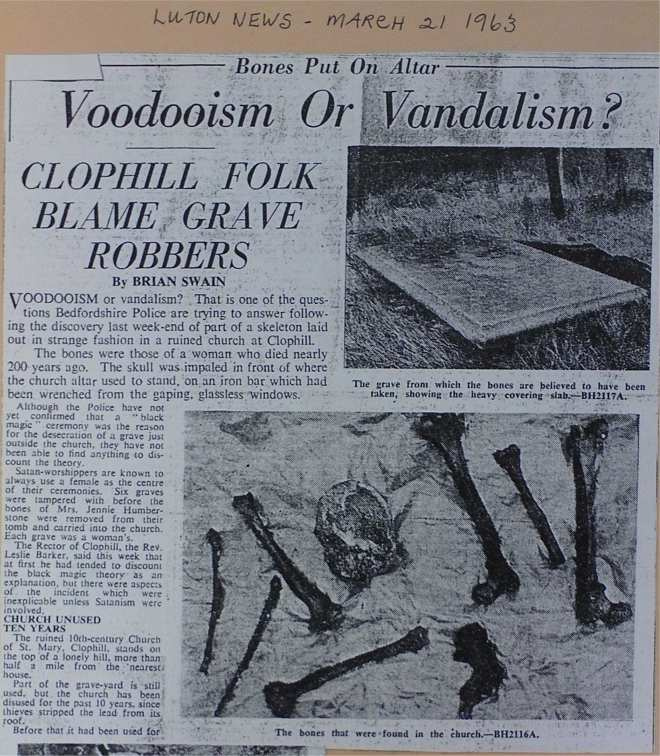
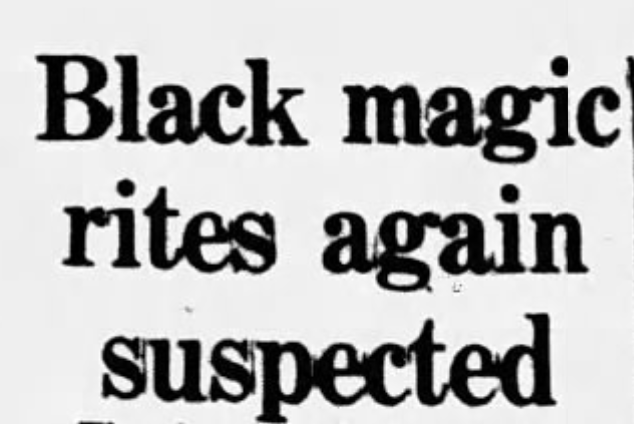
In 1963, two teenagers were seen playing with a human skull in the middle of the street. Considering both football and TV was accessible at this time, I’m baffled as to why a skull was a greater draw, but youngsters are strange beasts. When asked where they found their new plaything, they said that they had found it at the old church, jammed onto a piece of old window frame. When the police arrived, they reported finding several other human bones laid out inside the church, in what they described as a ‘pattern used for the Black Mass’, alongside bloodied cockerel feathers and red crosses. While these words came from newspaper reports, we must take into account that terms such as ‘black mass’ and ‘satanism’ were used as inflammatory phrases, informed by horror films and a LOT of Dennis Wheatley adaptations.
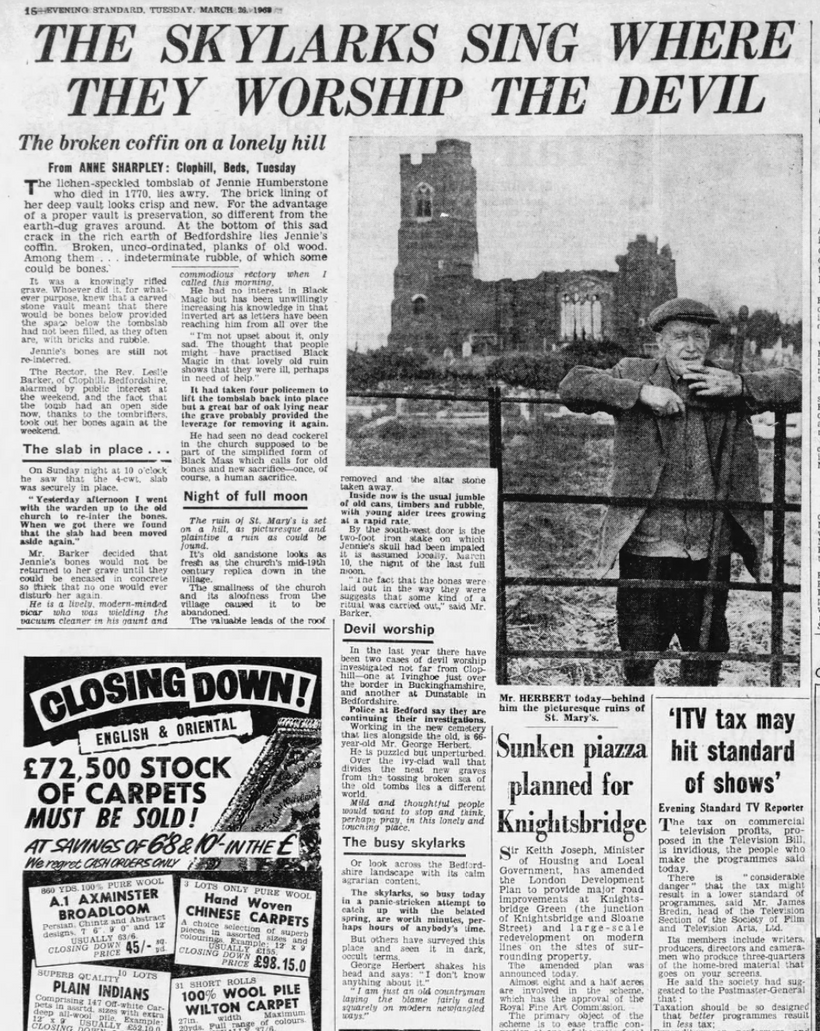
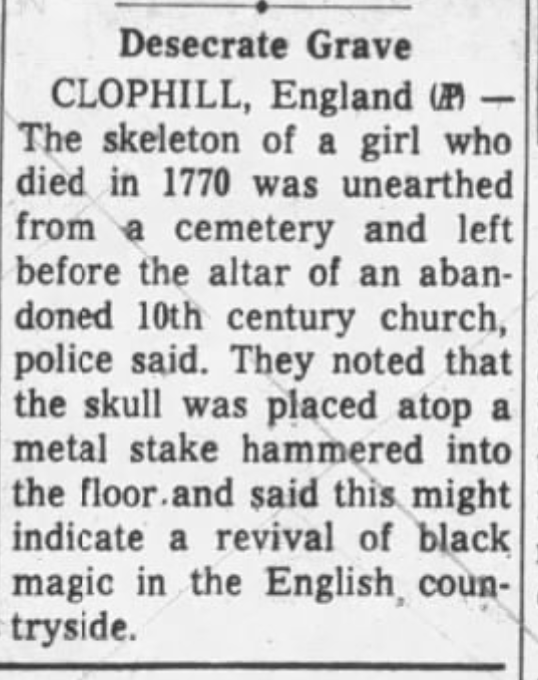
However, the rector of Clophill reported that further damage had occurred on site, as the graves of several women had been damaged, while the grave of one Jenny Humberstone, who died in 1770, had been not only damaged but opened, her coffin unearthed and split open like a deathly kinder egg. The bones scattered throughout the church, were 22-year-old Jenny’s. Both he and his churchwarden were keen to place themselves as experts in Satanic rituals and occult tradition, remarking that the desecration was at the hands of such dark religious extremists, and not that of local vandals. Similarly, the rector confirmed that Satanists always focus their ritual worship around women – dead or alive. Many of the assertions made by clergy have since been reappraised by contemporary commentators and seen to be equally as misinformed and influenced by popular horror media, as much as the newspapers themselves.
Later that same year, the heads of several cows and a horse were found in nearby woodland, all linking back to the happenings at Clophill, where St Mary’s was already renamed ‘the Haunted Church’. Thereafter, multiple copycat rituals occurred across the UK, particularly Lancashire, where animal remains were left in pseudo-Satanic displays across rural churches. Shortly afterwards, some Bedfordshire agricultural students confessed to killing a cockerel and drawing a cross as the church at Clophill as a ‘huge joke’ that no longer seemed funny, yet this was years before the graves were disturbed, and the real perpetrators of the grave damage at Clophill were never found.
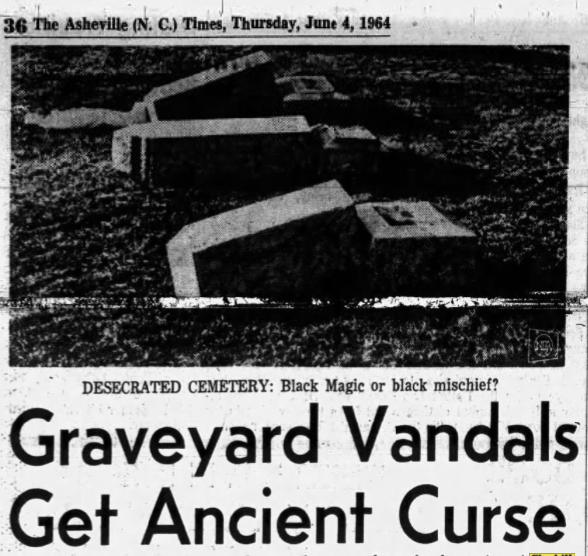
Regardless of origins and authenticity, the reputation of being evil and haunted was ingrained into the fabric of the site. In 1963, some local college students were found at the church, dressed in white sheets and having a grand old time, while in 1969 a group of ten teenagers were caught and arrested for ‘riotous behaviour’ on site and fined £10. Naturally, ever since, the site has been a popular haunt (sorry!) for ghost hunters, who seek to contact the evil spirits, or frustrated bodies, of those buried on site. Naturally, the landscape of the churchyard has changed considerably since the days of the village-based satanic panic, as the area was backfilled and levelled in the early 1970s, when its many headstones were removed and stacked around the perimeter of the site to enable mowing.
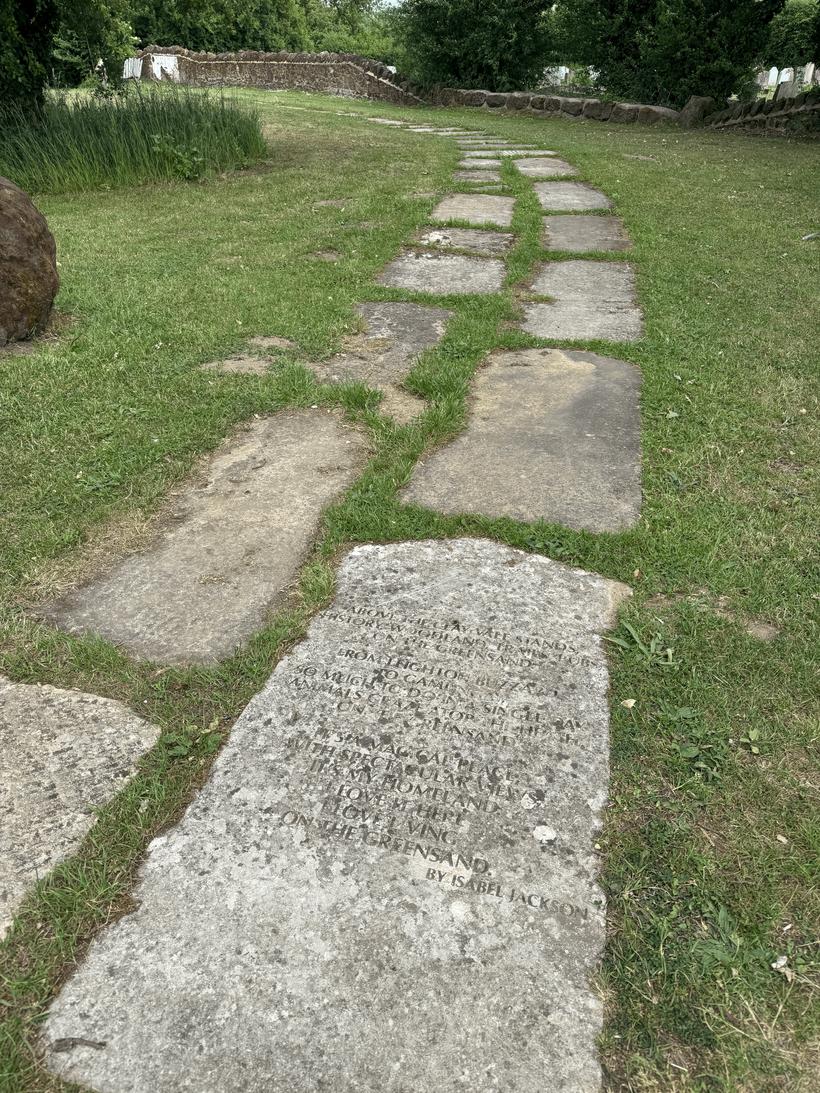
Thankfully, the site has been bolstered and preserved thanks to the efforts of the Clophill Heritage Trust whose nearby eco-lodges help to raise revenue for the now-stable church building. Further local grumbles arose in 2018, when old tombstones were removed from the perimeter and placed face-down to form a winding path. Engraved on the back of each stone was new text, as part of their ’Poetry and Peace Path’. While many churches (both active and redundant) have perimeters stacked deeply with hundreds of headstones, the Church Society president, Ms Ruoff, claimed that those at Clophill were a ‘target for anti-social behaviour’. She went on to say that ‘”You can go to many churches and actually walk on people’s gravestones in the aisle. You don’t go leapfrogging around them, you just walk over them normally…They’re there as a reminder of people who have lived their lives well or not in the past. Why should we worry about it? We get hung up on all sorts of strange things.”[2] Considering locals appeared not to have been consulted on the decision, the disapproval seems somewhat justified, and while I do try to stay neutral in the face of changing burial sites, I’m personally not a fan. However, some of the longer stones were marked as in danger of falling, and the inscriptions of each headstone were recorded with their location marked.
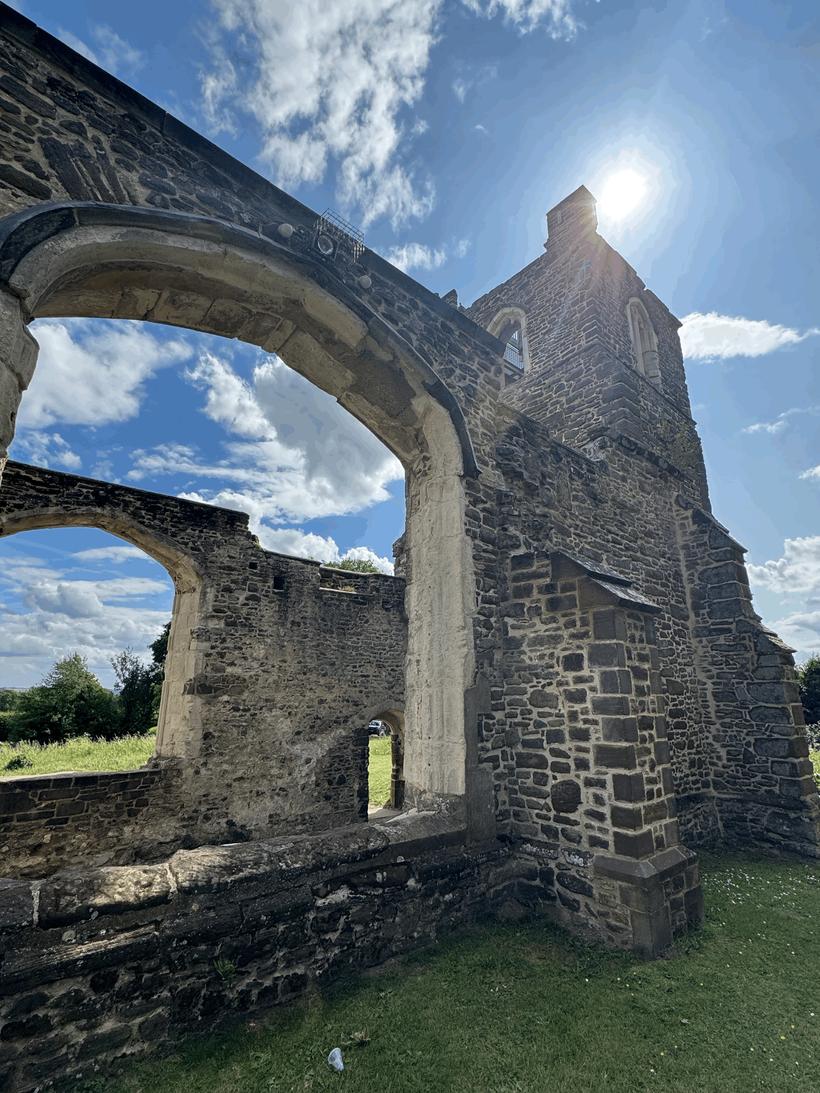
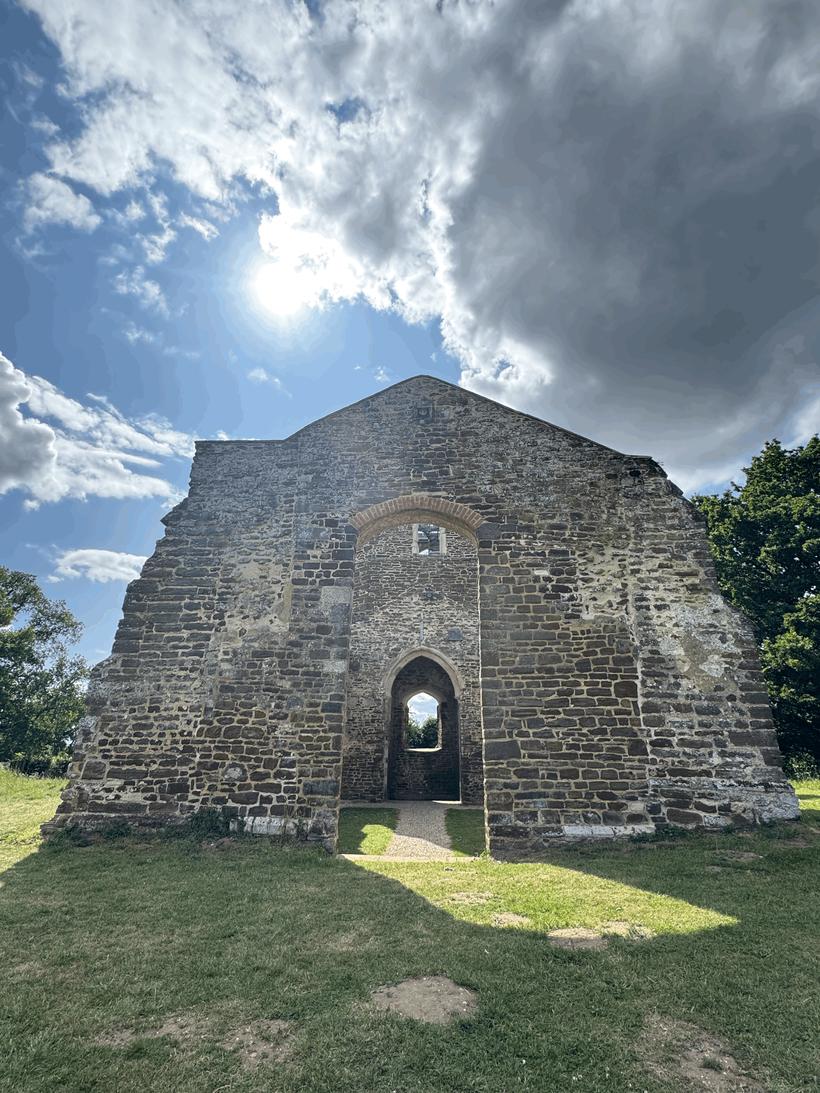
When I visited the site, it was a very sunny and windy day, free from demons, youths and the undead. And while I grumbled a smidge about the poetry path (I love headstones, I’m allowed.) the site of St Mary’s really is rather special and beautiful, in its own empty way.
***

Liked this post? Then why not join the Patreon clubhouse? From as little as £1 a month, you’ll get access to tonnes of exclusive content and a huge archive of articles, videos and podcasts!
Pop on over, support my work, have a chat and let me show you my skulls…www.patreon.com/burialsandbeyond

Liked this and want to buy me a coffee?
To tip me £3 and help me out with hosting, click the link below!
https://ko-fi.com/burialsandbeyond
***
[1] https://clophillhistory.mooncarrot.org.uk/oldstmaryspost1848.php
[2] https://www.bbc.co.uk/news/uk-england-beds-bucks-herts-45736101
 Burials & Beyond
Leave a comment