

Who doesn’t love wandering past a thatched cottage? We can take a brief moment to imagine that we’re Beatrix Potter, a Regency lady on their way to the ball or that little lad off’ve the Hovis adverts. Imagine finding all that joy, PLUS the threat of eternal damnation in a field in the middle of rural Lincolnshire!
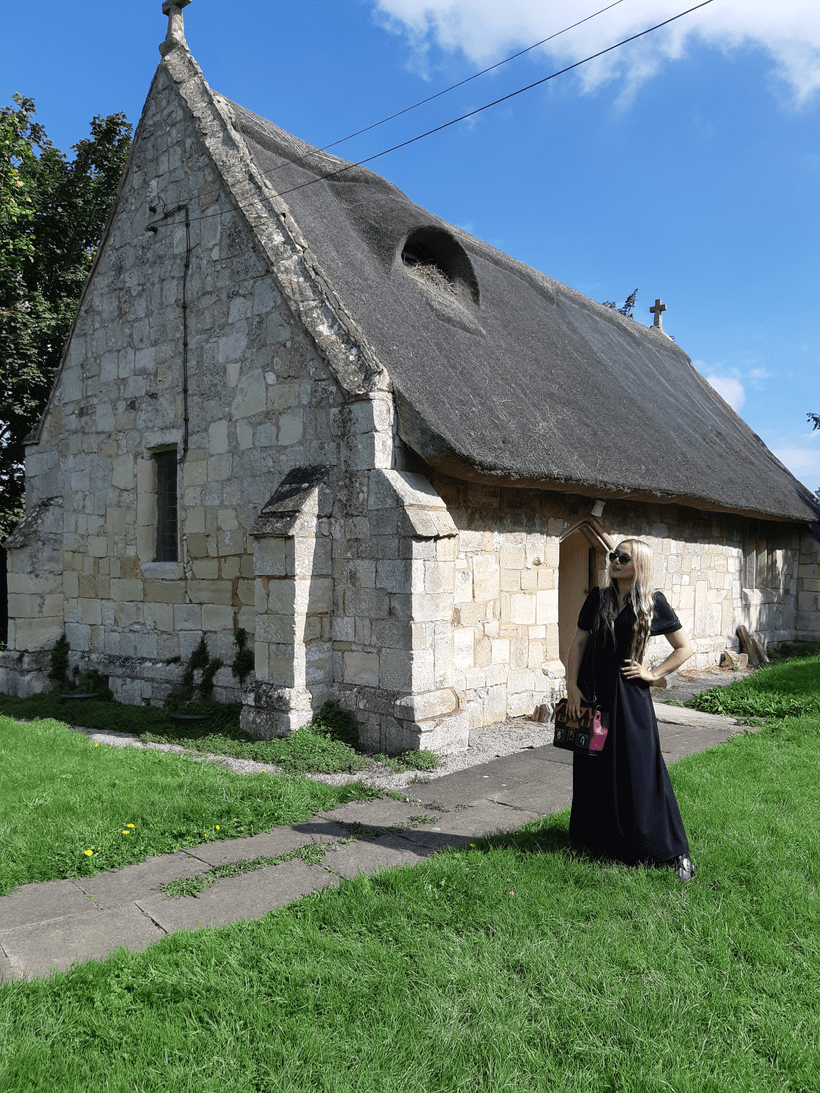


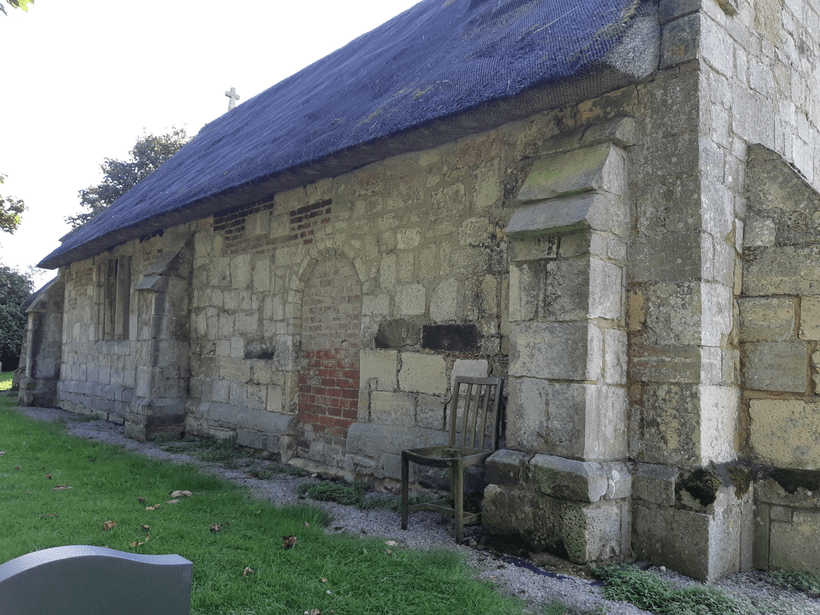
There are very few thatched churches remaining in England, and only one remaining in the whole county; this rarity can be found in the village of Markby, close to the small town of Alford (Which has a chippy, church, charity shops and a specialist wool emporium. It’s grand.)

The church of St Peter at Markby is an odd little building, created from the rubble of an earlier Augustinian priory. Founded around 1160 by Ralf Fitz Gilbert, Markby Priory was a substantial building, built upon good intentions, but quickly fell into a slump of rural sin. In 1438, Bishop Alnwick reported that Markby Priory was a mess, and the regarded it as the worst priory in the country! Rumours chased the priory’s inhabitants, and all were shown to be true upon the Bishop’s visit. He wrote that there was ‘not even the shadow of religion’, and found a community where Christian contemplation and silence was rarely practised. He also found monks addicted to gambling, booze and enjoying some decidedly un-chaste indulgences.
Soon enough, all the local canons joined ranks against the riotous monks and their prior, but failed to take into account that they were also commonly seen in the local taverns, with one visiting his mum’s house every day; hardly a life of removed religious contemplation. However, things improved over the centuries until the reign of Henry VIII and the dissolution of the monasteries began. Markby Priory was hit during the first Act of Suppression in 1536, when there were 8 canons and a prior in place, all of whom had to pack their bags and leave.
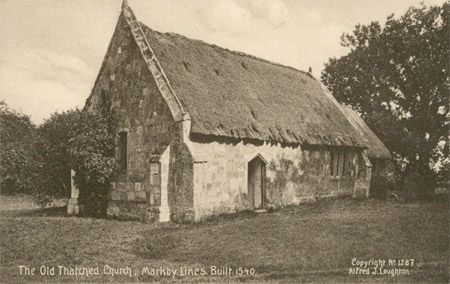
Following the dissolution of the priory, locals received permission from the monarch to use a corner of the priory for worship. Later, they received permission to construct a purpose-built church. Built in 1611, the church that stands here today hasn’t changed very much, except for the fact that it wasn’t originally thatched – a scandal! The dinky church was originally tiled, until the churchwarden Richard White decided to thatch the roof in 1672, taking all the tiles for himself as payment!

The church bears several nods to its older roots, with a stunning Norman dog-toothed chancel arch and some hefty roof beams that, while marked with 1611, were thought to be salvaged from the former priory.


The font is 14th century with a standard octagonal design, taken from the earlier priory and marked with several examples of ancient graffiti – most notably two crossed Vs. These VV, W and M symbols are common church inscriptions and have never been accurately interpreted. Some believed the VV signs are associated with the cult of the Virgin Mary, with the ‘V V; representing ‘Virgo Vurginum’ (Virgin of Virgins), but this is a relative recent suggestion. These symbols are some of the earliest examples of ritual marks, with engravings found in the runic systems of Scandinavia. According to the medieval graffiti project, ‘it is still regarded as a Holy sign associated with life, death and fertility in many areas of the eastern Baltic.’[1]

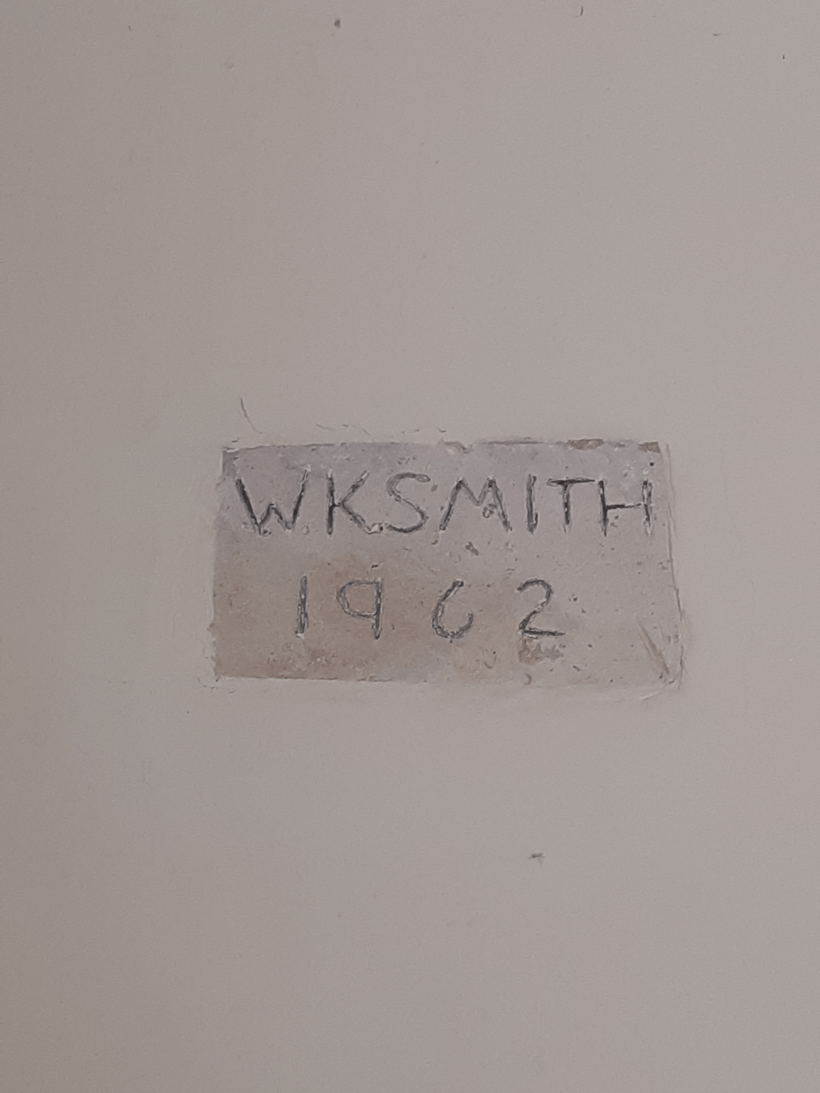

The church interior is relatively bare and simple – unsurprising considering the period of its construction – but with a few nice examples of 19th century church furniture, such as the rows of well-preserved box pews.

A strange little surprise is a beautifully preserved 13th century rose sculpture, set into the wall.


Being in such a rural position, the church has had its fair share of hard times. By the turn of the century, the building was rather worse for wear, used only for occasional weddings and funerals, with regular worship held at a temporary ‘tin church’ made from corrugated iron. This ‘temporary’ structure was used until 1962 when the rust became so bad that parishioners’ only option was to return to the stone church and attempt a serious renovation. The thatch was last replaced in 2008 and – dare I say it – is probably due for replacement soon.
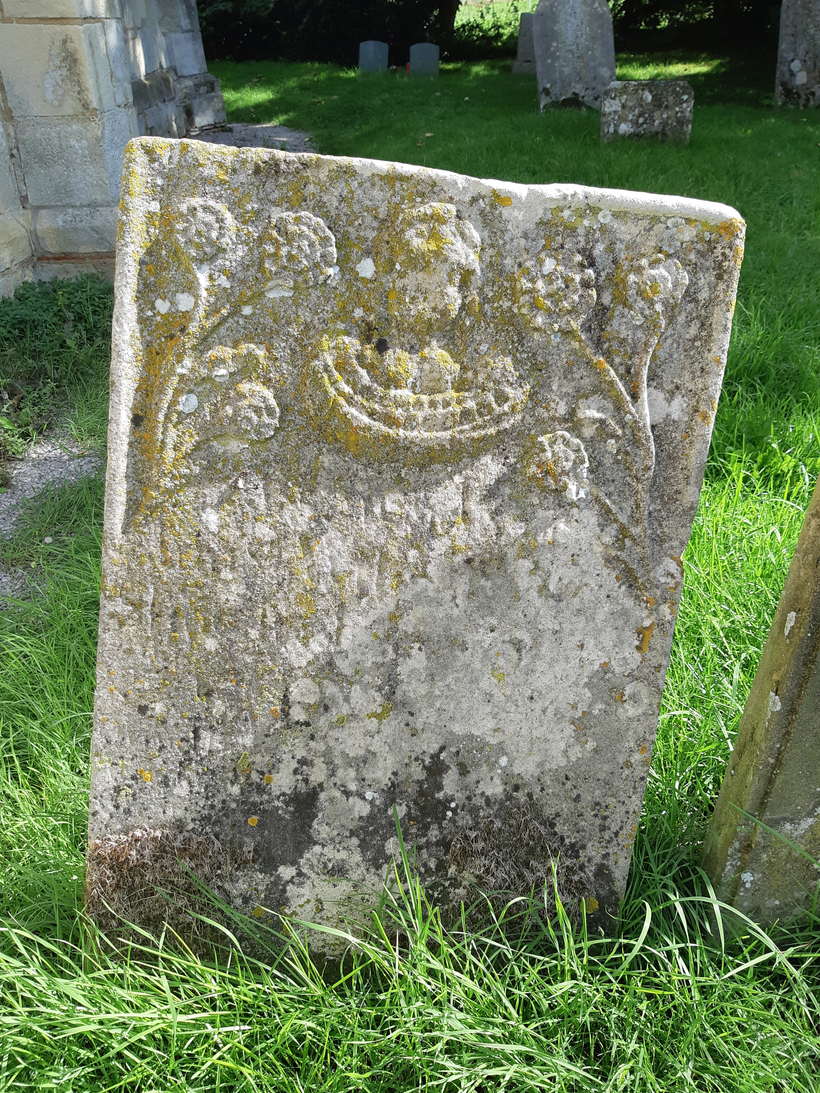

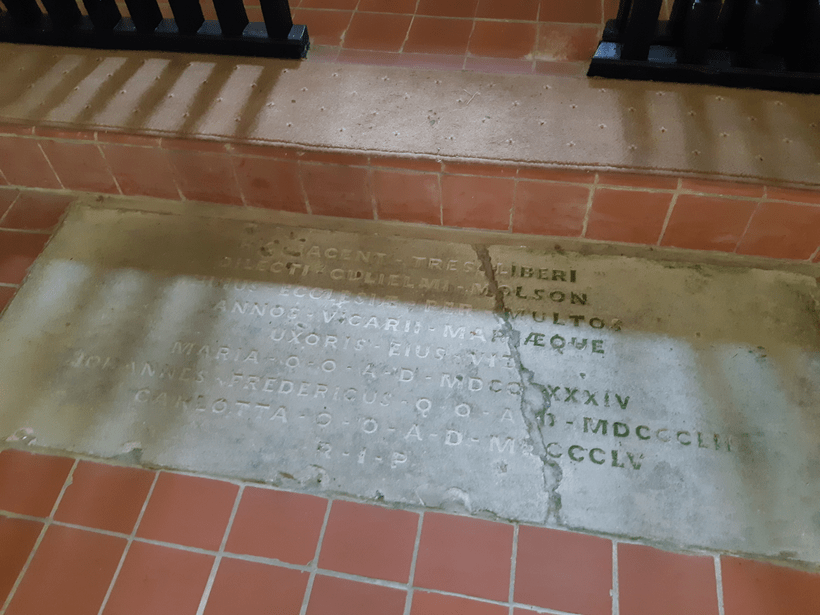
The churchyard is rather sparse for such an old building. There’s a handful of older grave slabs half-repurposed as paving slabs, but the majority of graves are more modern, dating from the 1960s onwards. I can only presume that this is a result of headstone clearances during the 60s renovations and the opening of nearby purpose-built cemeteries.

A handful of older (c19th century) graves had interesting decorations, such as a cherub surrounded by flowers and a few draped urns in shallow relief, and a few modest barrel tombs could be found towards the back hedge.
As ever, I try to find any war graves on site, and came across A. Seymour’s headstone.

1944740 Senior Aircraftman, A Seymour, Royal Air Force, died 13th January 1964 age 18. A war grave from a conflict outside of WWI and II is quite the surprise, and proved too difficult to research with the war grave commission’s current search tools.

Inside the church is a WWII plaque to two local men who lost their lives in the conflict – Norman Enderby R.A.S.C. 1st Airborne Division who died over north-west Europe on September 18th/19th 1944 aged 21.
According to paradata, “The aircraft that Dvr [Driver] Enderby was onboard (RAF 295 Squadron, Stirling LK-170, base Harewell.) was hit by Flak when returning from a re-supply mission at Arnhem and crashed in German held territory near the house of Mr F. B. van Rie, Eede W.35, municipality of Aardenburg at 15.50h. There were no survivors and only one unidentifiable soldier could be recovered from the wreckage (probably a despatcher), along with the RAF Air Gunner.
Eye-witnesses of the recovery of the wreckage in 1945 confirmed that the aircraft crashed nose first, and the fuselage, with the exception of the tail section, was completely compressed and destroyed. (Roll of Honour, Battle of Arnhem, 5th revised edition, 2011). The other remains were declared unrecoverable due to the total destruction.”[2]
Also, Ernest Arthur Johnson R.A.F who died at Moena, Celebes Island (Indonesia) on November 14th 1944 aged 29. The roll of honour states that: Leading Aircraftman 646198. Royal Air Force. Memorial states died at Moena, Celebes Island on 14th November 1944, aged 29 years (CWGC has 28 years). Son of Alfred James and Myra Beatrice Johnson of Markby, Lincs. Commemorated AMBON WAR CEMETERY. 33.D.6.
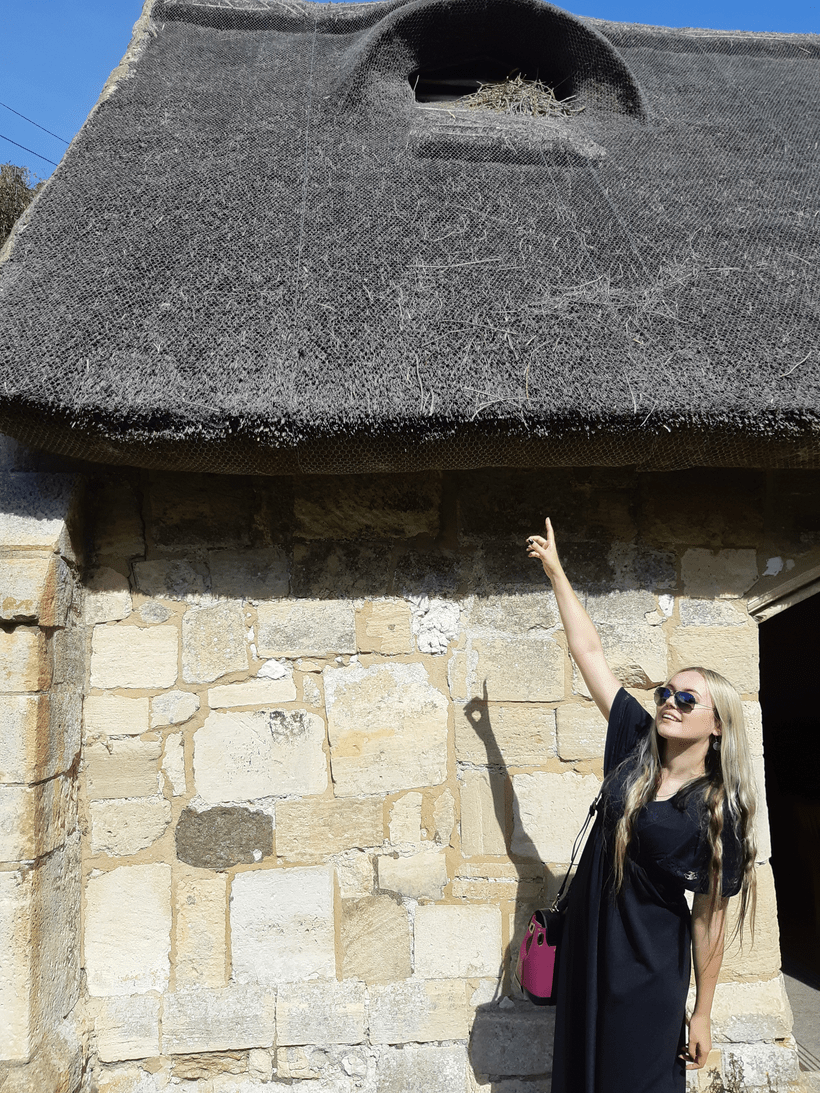
The church is rarely open today and not used for services. I was fortunate to visit during a local churches festival some time ago, and would implore you to do the same. Besides, if you’re not up for visiting multiple churches in a day, there’s some quality old ladies to befriend and a good selection of tea and cake stalls, which should cover all interest groups, surely?
[1] http://www.medieval-graffiti.co.uk/page15.html
[2] https://www.paradata.org.uk/people/norman-enderby
***

Liked this post? Then why not join the Patreon clubhouse? From as little as £1 a month, you’ll get access to tonnes of exclusive content and a huge archive of articles, videos and podcasts!
Pop on over, support my work, have a chat and let me show you my skulls…www.patreon.com/burialsandbeyond

Liked this and want to buy me a coffee?
To tip me £3 and help me out with hosting, click the link below!
https://ko-fi.com/burialsandbeyond
***

 Burials & Beyond
Leave a reply to Carol Bingham Cancel reply