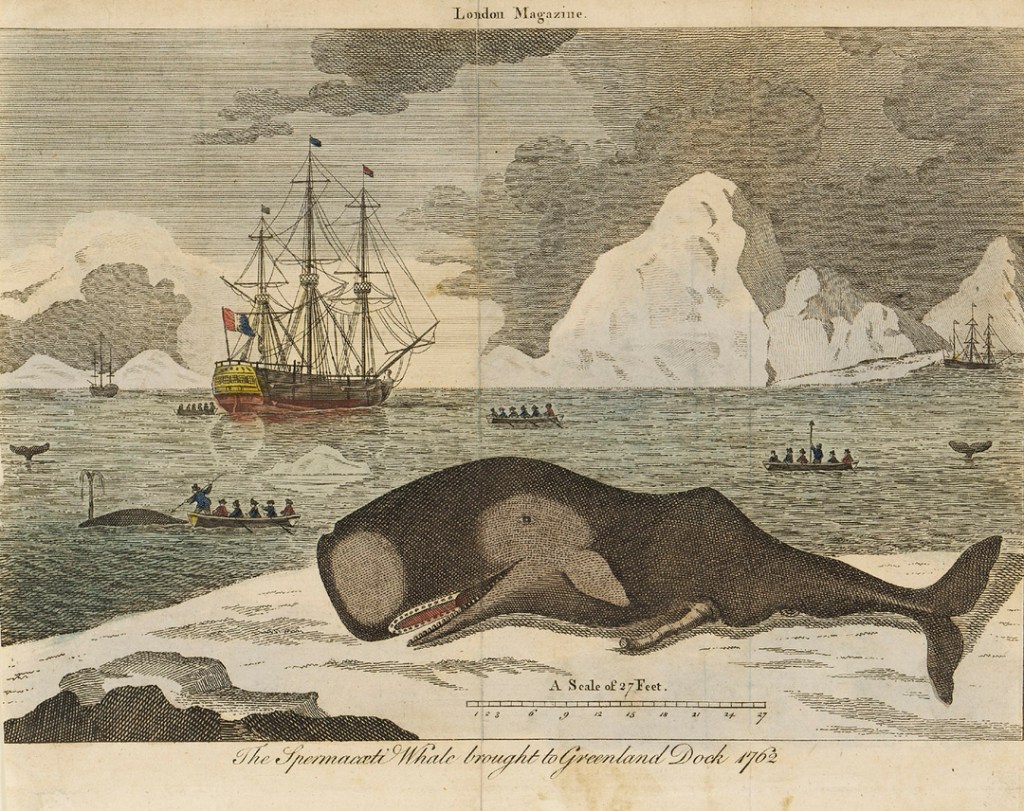
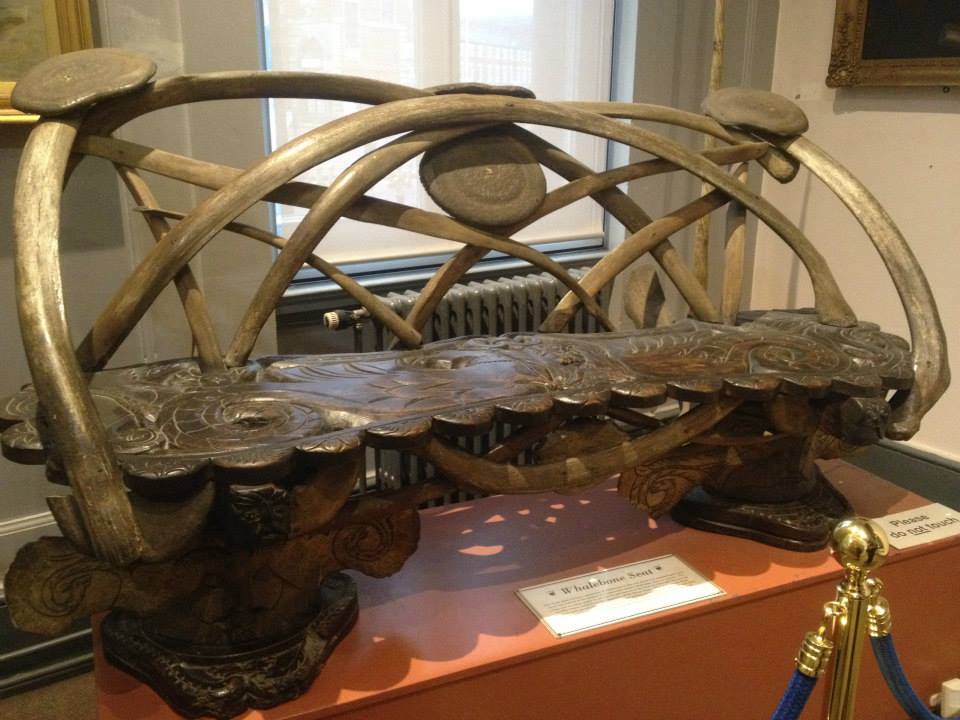
Whale carcasses and I have got a bit of history. Obviously, being of the gothy persuasion, I hold Whitby’s whalebone arch in high regard and have posed beneath it in a variety of unwieldy outfits for decades. However, as a child, I became obsessed with whaling. Namely, British whaling history in the 18th and 19th centuries. Thanks to regular trips to Hull maritime museum, I spent many of my early years drawing scenes of harpooning, while nursing a desire to make a bench from bird bones (‘for my Sindy dolls’) as a miniature version of Hull’s own whale bench. Even now, I enjoy books on whaling history and make a bee-line for anything whale-based in a museum. In short, I was very, very popular at school.
(Also, I believe whaling to be a very cruel industry. That goes without saying. I simply remain entranced by history)
So when I stumbled across this massive bone in Derby’s Museum of Making, I knew exactly what I was faced with. It’s a whale scapula – a shoulder bone.
This particular huge specimen was decorated with the words ‘The Spade Bone of ye Wonderful Dun Cow. 1606’ and was a brilliantly preserved piece of osteological maritime art. Not something for a mantlepiece of course, but lovely nonetheless.
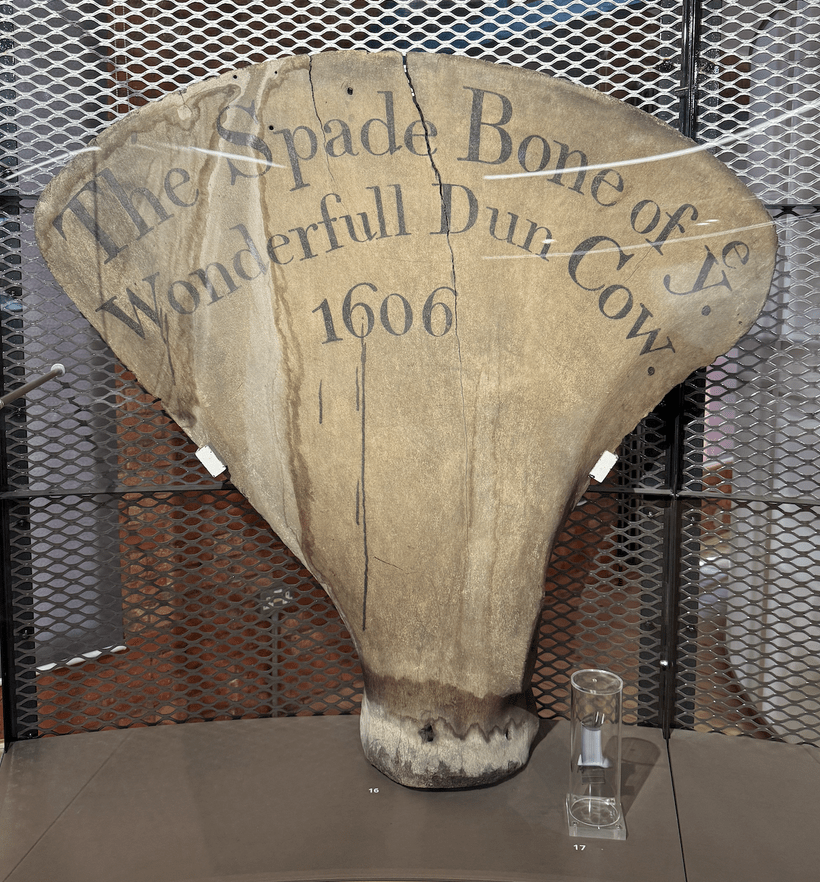
So what about this cow shoulder? This enormous bone isn’t just a hefty ornament, but a large sign, believed to have been used in a pub. In the 1880s, an inn called ‘The Dun Cow’ was located on Bold Lane in Derby, where they most likely displayed this scapula outside as a quirky form of street furniture/signage.
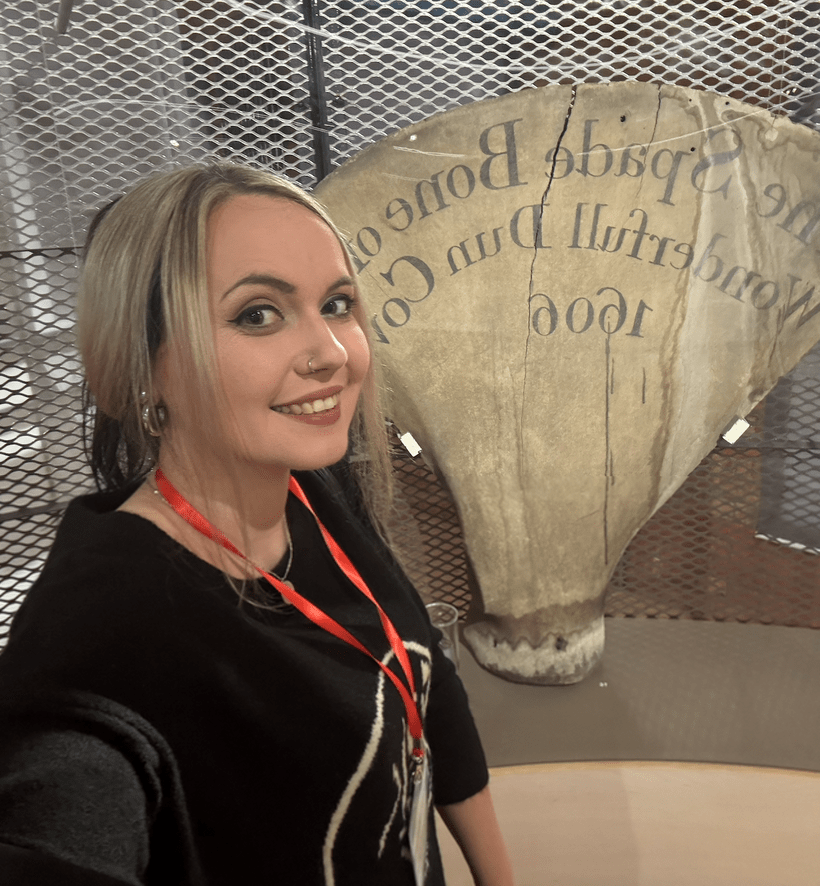
While this does seem rather bizarre today, street furniture and home decorations made from whale bones were a common sight in the 19th century where bones – especially jaw bones for use in arches – were returned back to the UK as trophies and oversized curiosities.
While the species of whale that created the Dun Cow sign can’t be accurately discerned, it is likely to be either a bowhead or right whale, both being large baleen whales that were commonly hunted for their blubber and baleen, which was used in a host of consumer goods.
Whales aside, what on earth is a Dun Cow? Well pals, here be folklore.
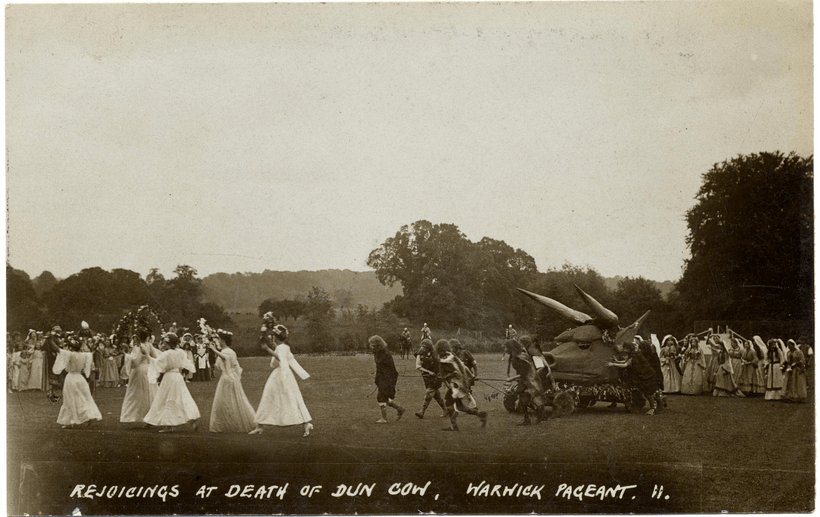
While ‘Dun’ may refer to a greyish-brownish colour, this is no ordinary cow. The Dun Cow is a mythical, ferocious creature that used to roam close to Rugby in Warwickshire. Stories recorded how this enormous cow was owned by a giant and had a never-ending supply of milk. One day, a tricksy old witch filled her pail with milk, but wanted to mock the cow by also filling up her sieve. Mortally offended by the witch, the cow went into a rage and broke free of its paddock, rampaging across the county until it found its way onto Dunsmore Heath, where it was killed by the legendary figure, Guy of Warwick.
Variations of the Dun Cow legend exist in Whittingham, Lancashire, Bristol and Durham, with most tales involving a witch and a sieve of milk. Unsurprisingly, this common tale inspired the naming of countless pubs across the UK – one such pub in Shrewsbury is one of the oldest pubs in the UK. However, our Derby pub is long gone and is unlikely to have made it to the end of the 19th century.
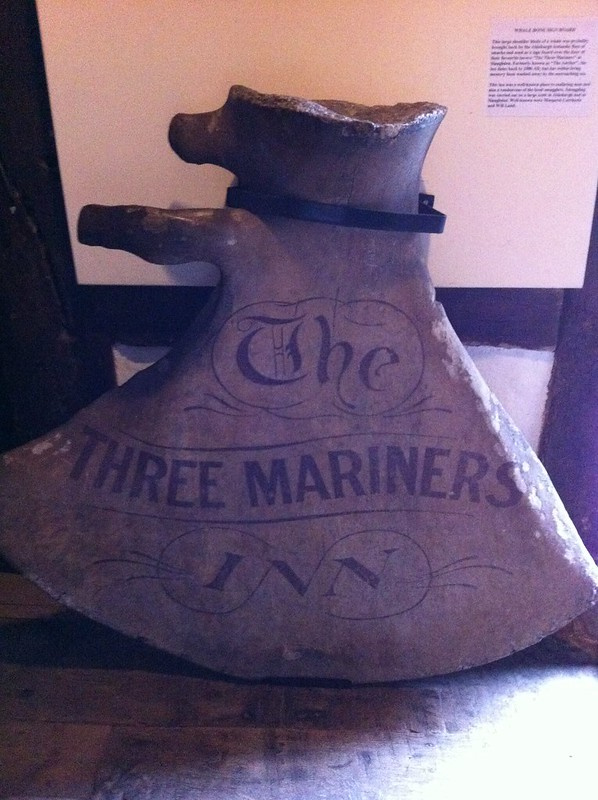
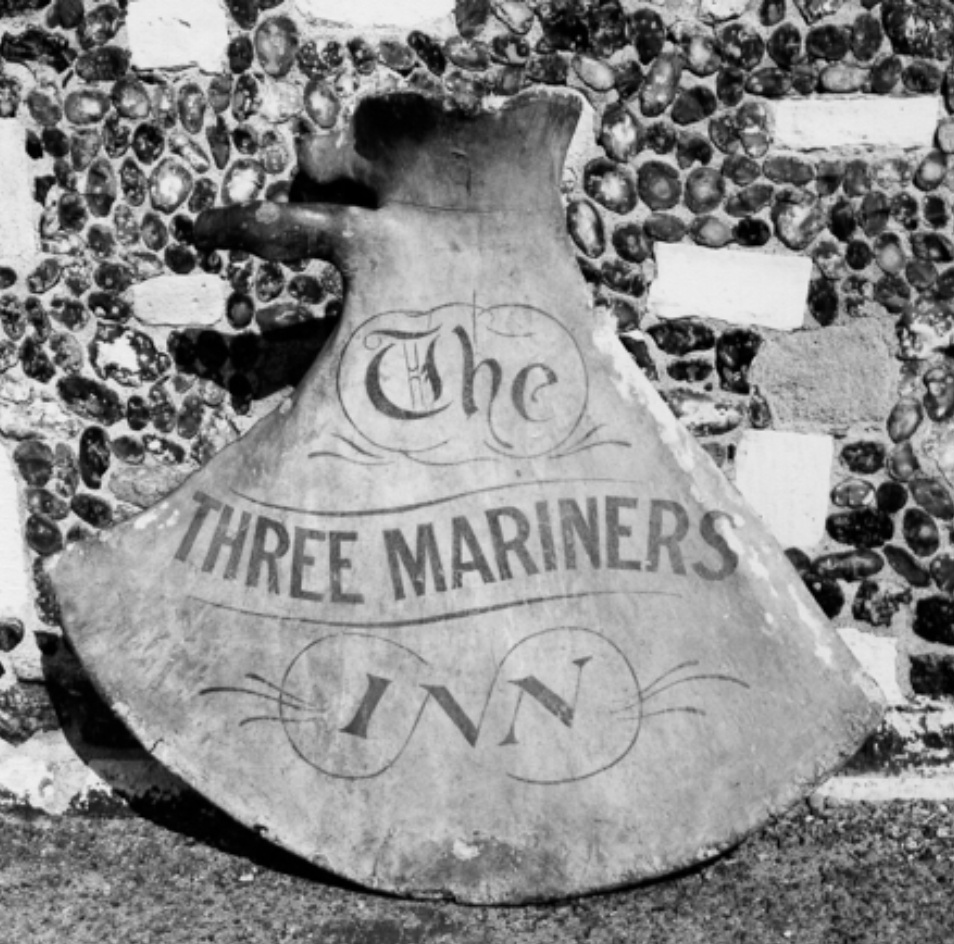
Sign taken from Slaughden’s former Three Mariners Inn
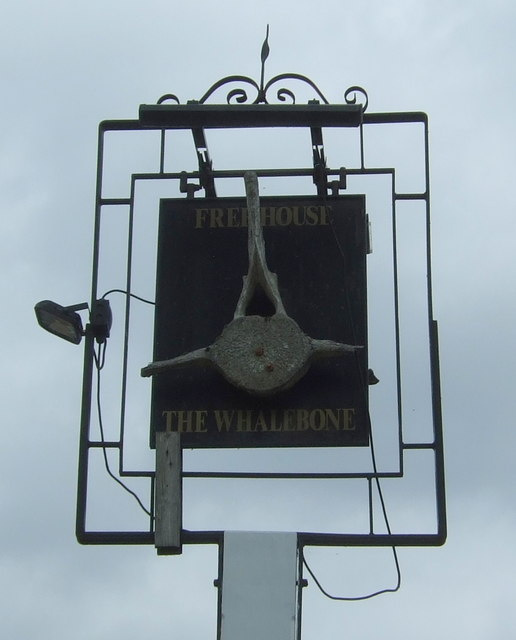
Other pubs in the UK used whale bones as advertising signs, many of which are lost to time, and some of which have been recently rescued. The Whalebone pub in Fingrinhoe, Essex retains a vertebrae on its signage, while the Three Mariners Inn sign in Aldeburgh lives on in the local museum, while the pub was claimed by the sea years before.
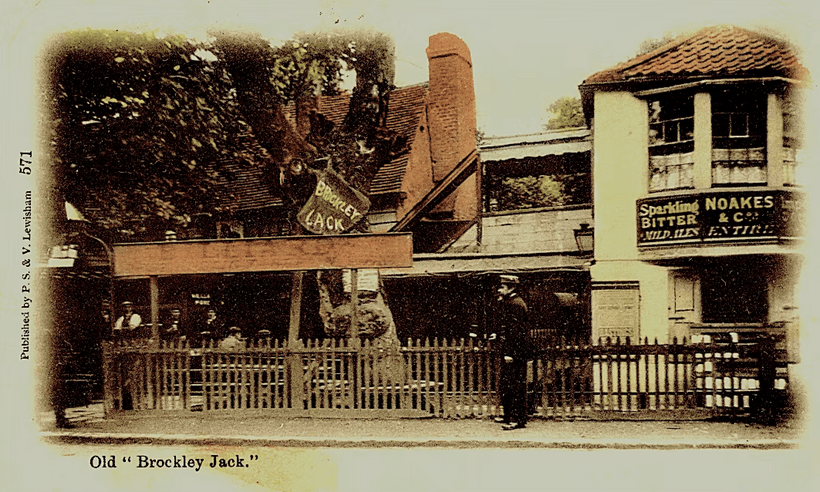
The Brockley Jack sign in Crofton Park, London made it through the centuries until a Greene King landlord removed it from the wall to make room for a TV (!). Narrowly saving it from disposal in 2022, the shoulder appears to live to fight another day in the hands of the pub’s historian. You can’t escape the whale-shoulder-to-pub-sign pipeline!
The Derby Dun Cow may be long gone, but its shoulder blade lives on, and for free entry, you’d be a fool not to go and gaze at its heft.
***

Liked this post? Then why not join the Patreon clubhouse? From as little as £1 a month, you’ll get access to tonnes of exclusive content and a huge archive of articles, videos and podcasts!
Pop on over, support my work, have a chat and let me show you my skulls…www.patreon.com/burialsandbeyond

Liked this and want to buy me a coffee?
To tip me £3 and help me out with hosting, click the link below!
https://ko-fi.com/burialsandbeyond
***
Further Reading:


Leave a Reply