
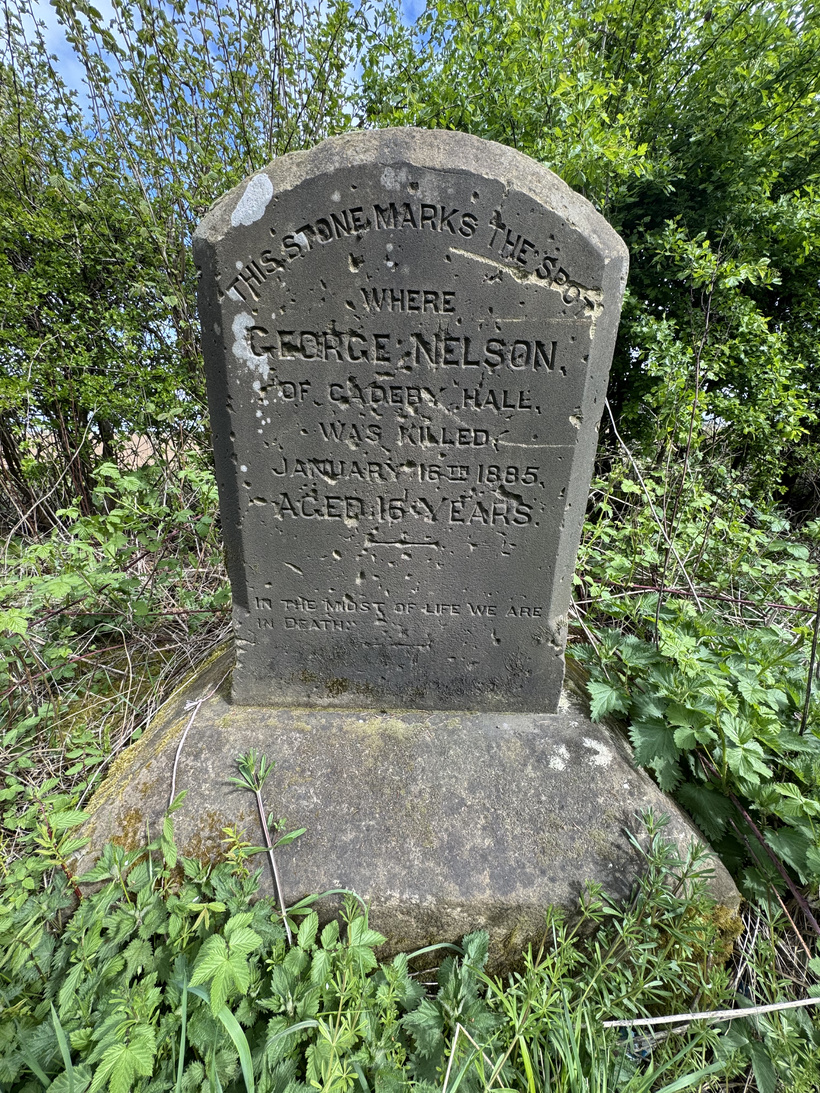
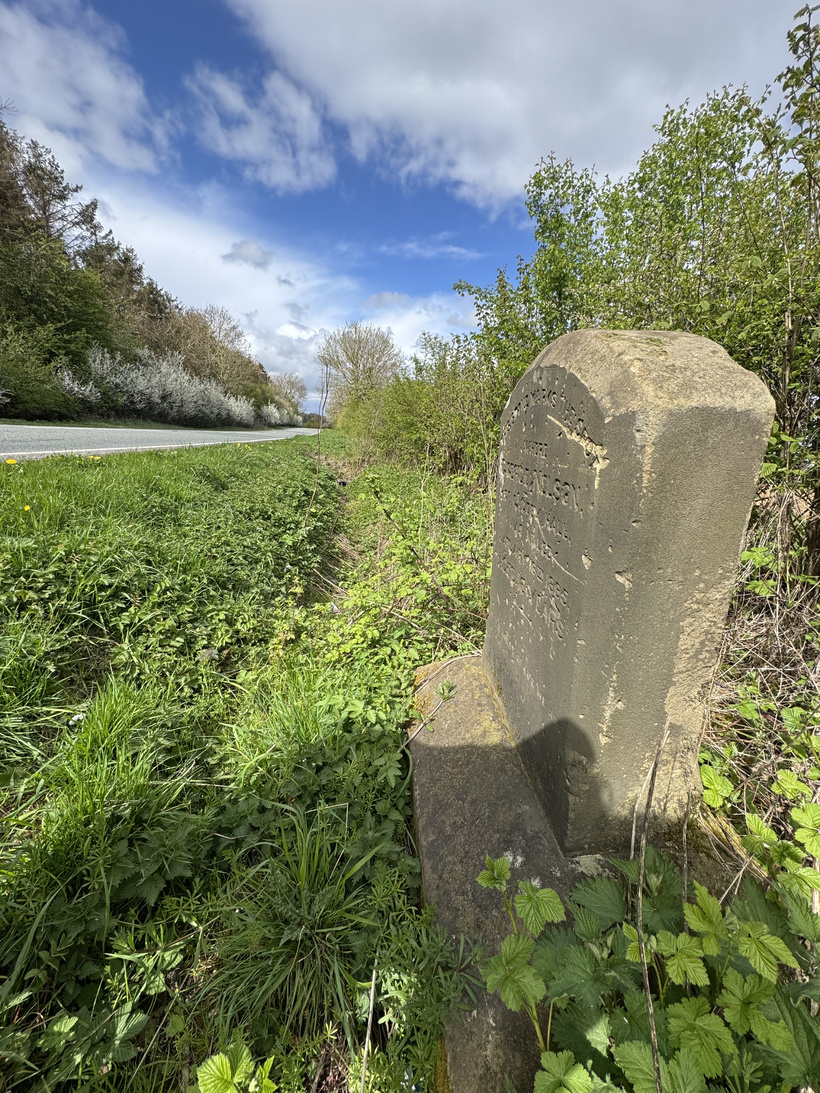
I’m not usually found squatting by the side of the road, but when I am, it’s usually because there’s a grave or a ghost nearby. Luckily for me, in this instance, there’s both. The memorial to George Nelson is easily concealed; sitting above a ditch, close to a hedge and beside a busy road, it’s a real ‘blink and you’ll miss it’ stone. It’d be easy to presume it was a milestone or similar marker, save for its close resemblance to a conventional headstone.
While this certainly looks like a grave marker, it isn’t, nor is it an accurate marker of where the deceased passed away, but when was anything in history or folklore simple and easy to follow?
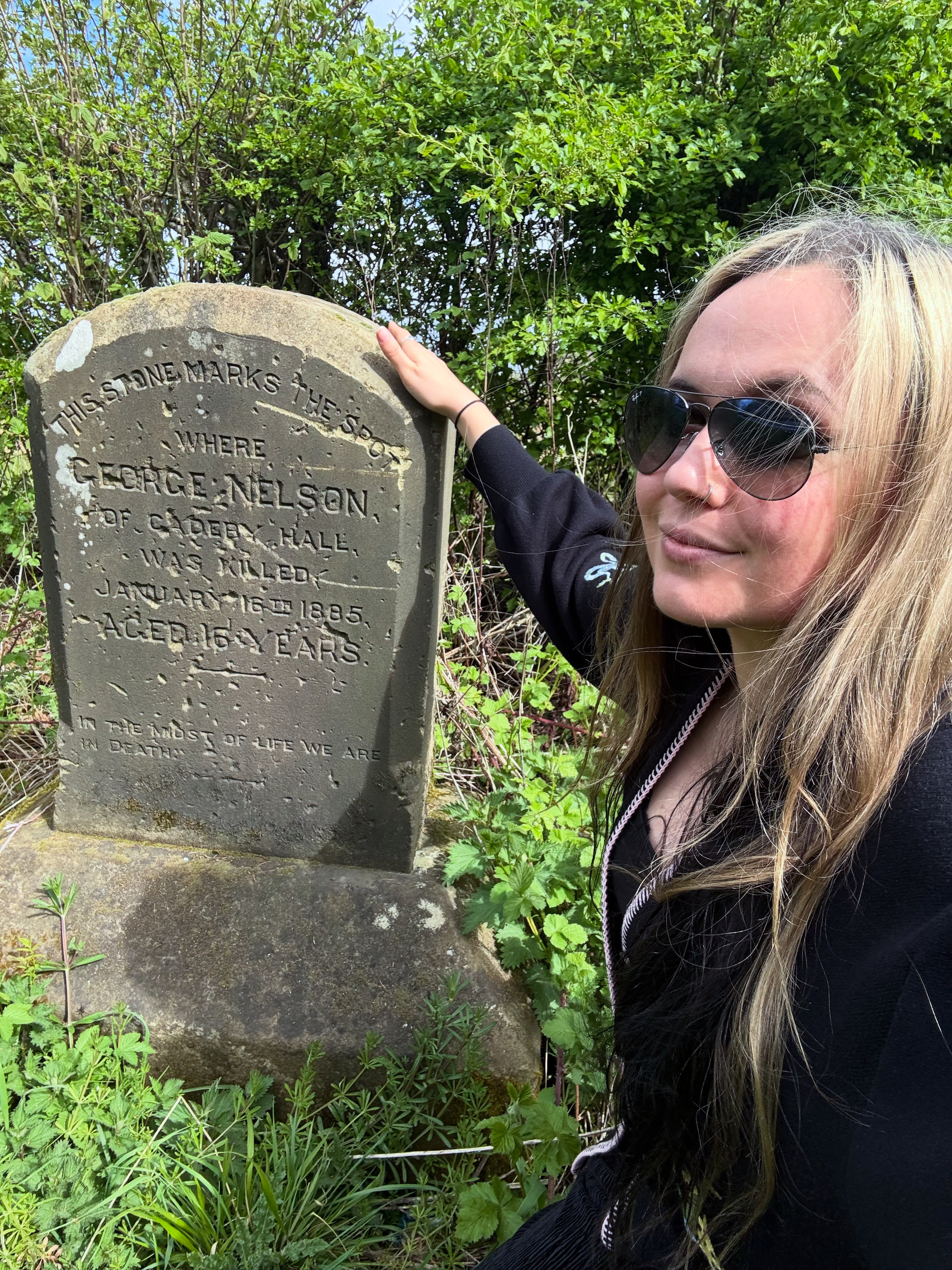
The marker reads:
‘This stone marks the spot
where
George Nelson
of Cadeby Hall
was killed,
January 16th 1885,
aged 16 years
‘In the midst of life we are in death’
George Nelson certainly died close by in 1885 following a fall from his horse – whether he was thrown, fell, or was trapped by an upturned cart is a detail that appears to be lost to the history books. However, despite a lack of solid paper trail, versions of his fate have been passed down, largely via oral tradition, ever since.
George Nelson was a young scholar, heir to a grand fortune, and Chancery ward of a Mr Kirkham with whom he had been spending the school holidays. He should have lived a long life in the luxury of Cadeby Hall, but it was not to be.
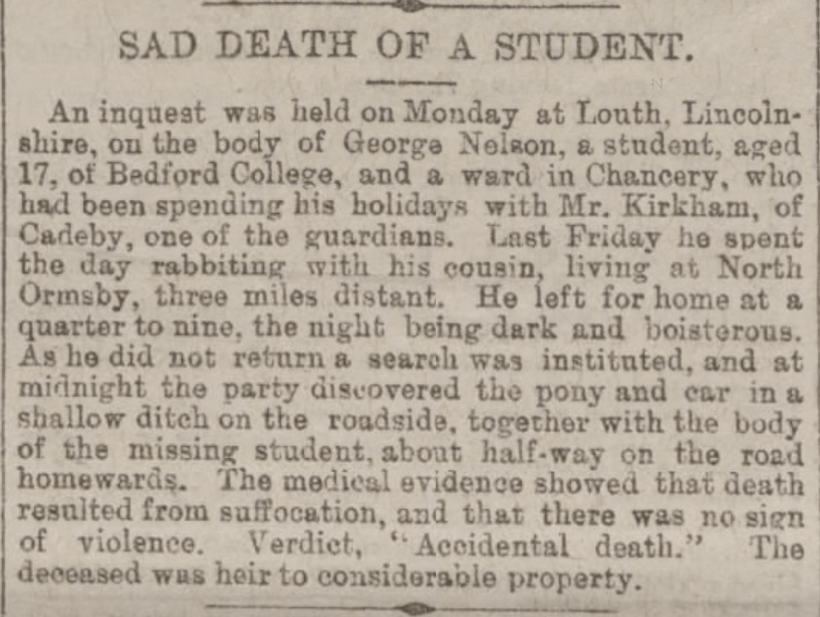
An article in the Manchester Courier and Lancashire General Advertiser (21/1/1885), describes an estimation of the night’s events.
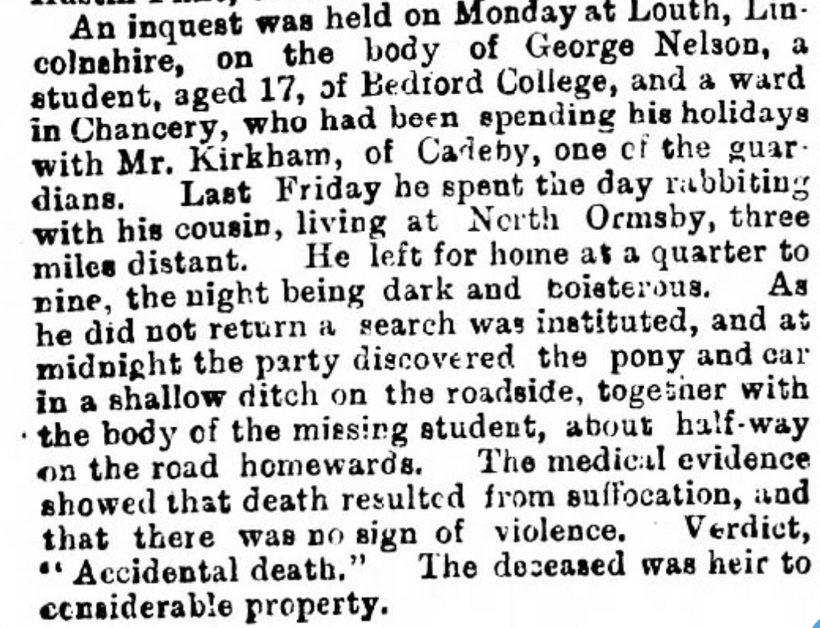
“An inquest was held into the death of a student of Bedford College, George Nelson, who was spending the holidays with his uncle Mr Kirkham of Cadeby Hall, one of his guardians . He spent the day rabbitting with a cousin at Great Ormesby and left for home at 8 45pm, the night being dark and boisterous. When he did not return, a search was undertaken. The pony and car were found in a shallow ditch and George’s body was found on the road half way to the house. The medical evidence showed death from suffocation with no signs of violence and the inquest verdict was accidental death of suffocation. The deceased was heir to considerable property.”
Meanwhile, another Manchester newspaper, the Evening News (20/1/1885), stated that:
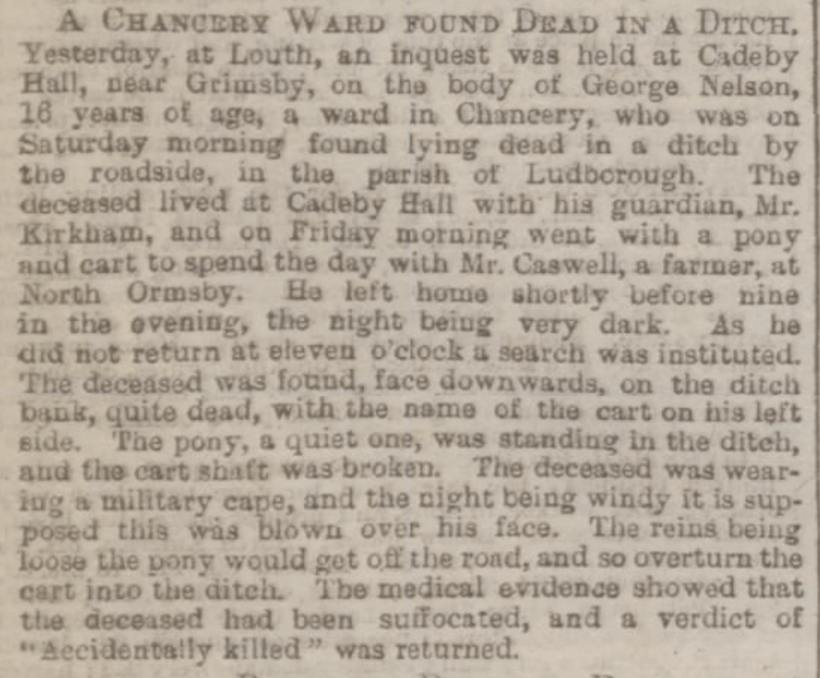
‘On Friday morning [he] went with a pony and cart to spend the day with Mr. Caswell, a farmer at North Ormsby. He left home shortly before nine in the evening, the night being very dark. As he did not return at eleven o’clock a search was instituted. The deceased was found, face downwards, on the ditch, and the cart shaft was broken. The deceased was wearing a military cape, and the night being windy it is supposed this was blown over his face. The reins being loose, the pony would get off the road, and so overturn the cart into the ditch. The medical evidence showed that the deceased had been suffocated, and a verdict of “accidentally killed” was returned.’
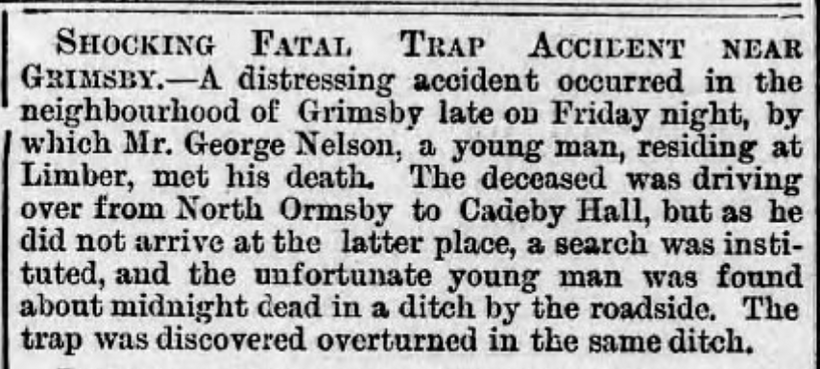
Some later regional news reports suggest that George had to open a gate to access the road. In doing so, he may have slipped and fallen into the dyke where he subsequently suffocated.
However, an article in the Grimsby Telegraph (04/10/74) offers a different version of events. Headed ‘The stone marking a tragedy of the 1800s’, it claims that George had been attending a party at North Ormsby, near Louth, which was attended by young people from the surrounding villages. On his way home, the horse reared, throwing and killing him. His body was found the next morning. Another re-telling of the story emerged a few years later in the same newspaper (10/12/1979), where the detail of the horse surviving and galloping back to the hall alone was added.
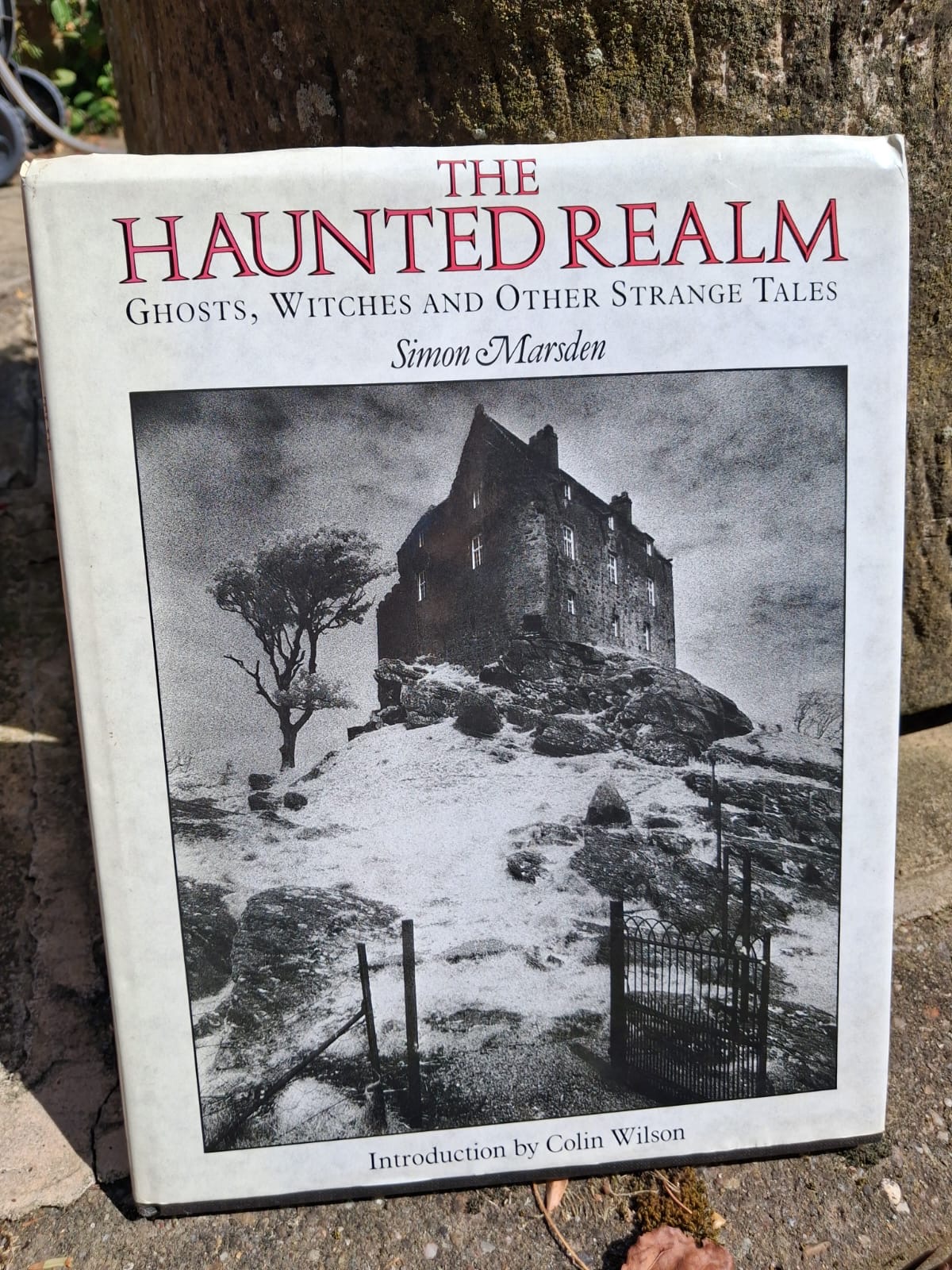
In 1986, photographer Simon Marsden published ‘The Haunted Realm’, a book containing a selection of his trademark haunting infrared images, and accompanying text. Living in Lincolnshire (later becoming baronet of Grimsby), much of his work was focused around the county’s curious landscape and underlying supernatural histories. As such, Cadeby Hall was one such subject of his creative vision. Marsden wrote that Nelson ‘was killed when his horse shied from lightning during a storm’, later referencing a newspaper clipping provided by his brother that offers a rather more haunting experience of the roadside memorial. The excerpt states that a lorry driver was passing down Barton Street when a man on horseback rode out in front of him, before rearing up and throwing the rider in to the dyke. When the lorry driver pulled over to help the injured man, he could find no trace of a horse nor rider. This was but one of several incidents of the phantom rider’s appearance, as tales of spectral horses and riders have been reported across the familiar stretch of Barton Road. The reports of a boy and horse running across this stretch of the Barton Road are multitudinous, whereby unsuspecting motorists see a rider running out (and often thrown from the horse), but upon closer inspection, neither boy nor horse can be found. The road itself is known as an ancient trackway and and is suggested to have been used between Louth and the Humber for many centuries. Regarded as a prehistoric routeway, those believing in psychic imprints and the nature of ghosts attaching themselves to spaces across time may well see this stretch of road as an ancient hotbed for spooks
One account of a ghostly horse and rider was recorded in a 1992 issue of Lincolnshire Life magazine, where Tom Herbert’s article ‘The Riddle of the Stone’ recounts watching a horse and rider thundering through the mist at impossible speeds. While the witness tried to keep up, his own horse could not match such speeds, as the vision was soon joined by ‘The baying of hounds and the forlorn note of a hunting horn.’ While this particular report plays into traditions of ghostly hunts, many of the Barton reports are far more consistent in nature, and rather chilling.
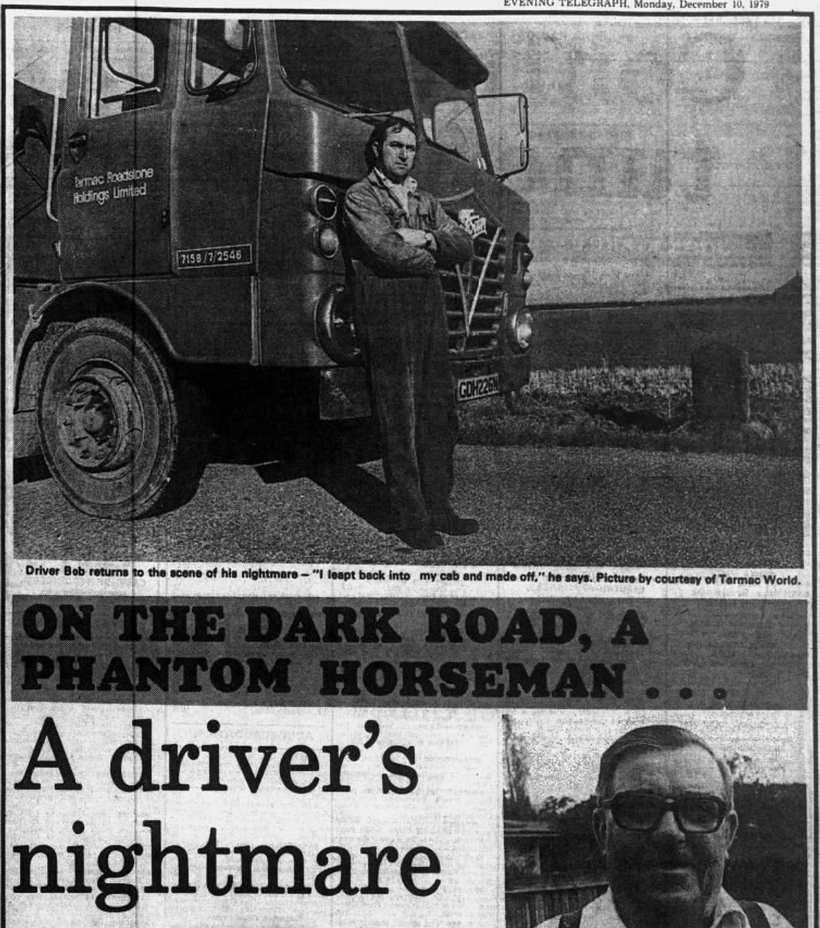
In December 1979, Bob Crowe, a tarmac worker from Scunthorpe, spoke to the Grimsby Telegraph claiming he saw the ghost of a horse and rider. Stating ‘I know I am going to be the laughing Stock of Scunthorpe when people read this, but I am deadly serious’, he recounts a sinister sighting when driving down the road during particularly grim weather:
‘As I came around the bend, I saw the cloaked figure on horseback riding with his back to me about 70 to 100 yards ahead… My first thought was ‘What the hell’s he doing out here on a filthy morning like this?’
As the rain poured in the darkness, Bob watched aghast as ‘the horse reared up and the rider was thrown off. I stopped as quickly as I could and jumped out, but there was nothing there.’ After seeing the memorial – which he believed to be a gravestone – he said to himself ‘Get out of here. It’s a bloody ghost!’ So sure was Bob of his experience that he contacted the society for Psychical Research and asked them to investigate. While It doesn’t appear as though the SPR made the trip to Lincolnshire, representative Dr. Michele Clare stated that his report would remain on file.
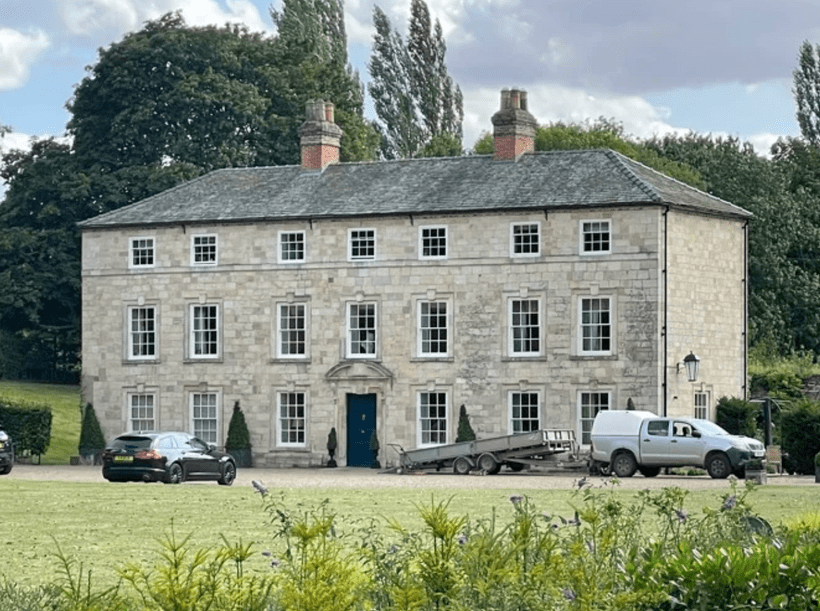
Cadeby Hall via Historic England
The hall itself has a rich history of mysteries, crime and curses, with more than enough tales to fill a book of their own. Most notably, the Hall has an association with the tale of a young boy who went missing in the grounds. While countless search parties scaled every inch of the house and gardens, he could not be found. However, years later, a group of workmen were inspecting an old dead tree and found the boy’s remains trapped in the hollow of the trunk. Upon hearing the news, the boys heartbroken mother put a curse upon Cadeby Hall, professing that the eldest son of Cadeby Halls’ owner would never inherit the house. Joining human remains with generational curses, tales such as this have only helped to add to the sinister and mystical history of Cadeby, which is well known as a ‘haunted house’. Naturally, ghost stories are rife, where clanging chains have been heard in the long blocked-up tunnels that are rumoured to snake beneath the house. Meanwhile, phantom monks have been seen, harking back to the theory that a monastery originally occupied the land beneath Cadeby Hall (historical records suggest the presence of a modest nunnery, but no such grand structures). Tying in the motif of ghostly horses, a carriage is said to be a harbinger of death, riding down the hall’s driveway when a death in the family is imminent. While the coachman may knock on the door, he swiftly disappears.
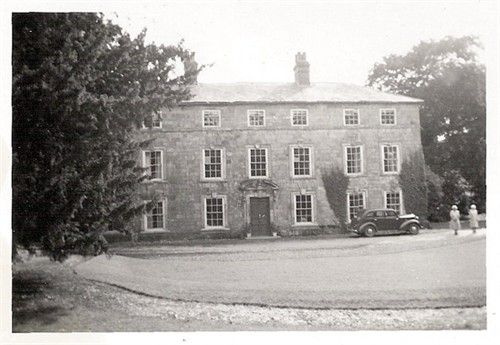
Cadeby Hall in 1929
While Cadeby Hall has a wealth of paranormal histories, the occupants were not free from their own string of tragedies – and whether this is due to the aforementioned curse is a matter of belief. Following a couple of notable deaths, the hall found itself at the centre of local scandal in 1869 when an infant’s body was found in a nearby privy. After questioning, the family’s teenage servant girl was accosted and accused of concealing the child, and ergo was responsible for its fate. While it is believed the child was stillborn, she still received a punishment of six months hard labour.
A solitary headstone beside the road would make a fine addition to Cadeby Hall’s macabre histories, however this is not the original site of the marker. Earlier accounts of the stone’s presence – and anecdotes from more mature local residents – suggest it was originally set far back into the adjoining field, rather than by the roadway. As has been the fate of countless monuments, ancient structures and earthworks, over the years, farmers grow tired of working around an inconvenient structure and remove or dismantle things to ease their workload. Luckily for Lincolnshire, this farmer did not destroy the stone, rather moving it to a more convenient location. Finding an exact date for this relocation is impossible unless a particularly detailed diary emerges, however it’s broadly understood to have happened in the 1960s. Some believe that it was this act of removal that conjured George’s spirit – and accompanying horse – to haunt the locale. Conversely, the memorial suddenly being visible from the road could account for local imaginations spinning some new and scary spectral yarns. While I haven’t been able to find any reports of ghost and rider hauntings in the area prior to 1960, I’ve never shied away from a challenge and will certainly be keeping my eyes peeled.
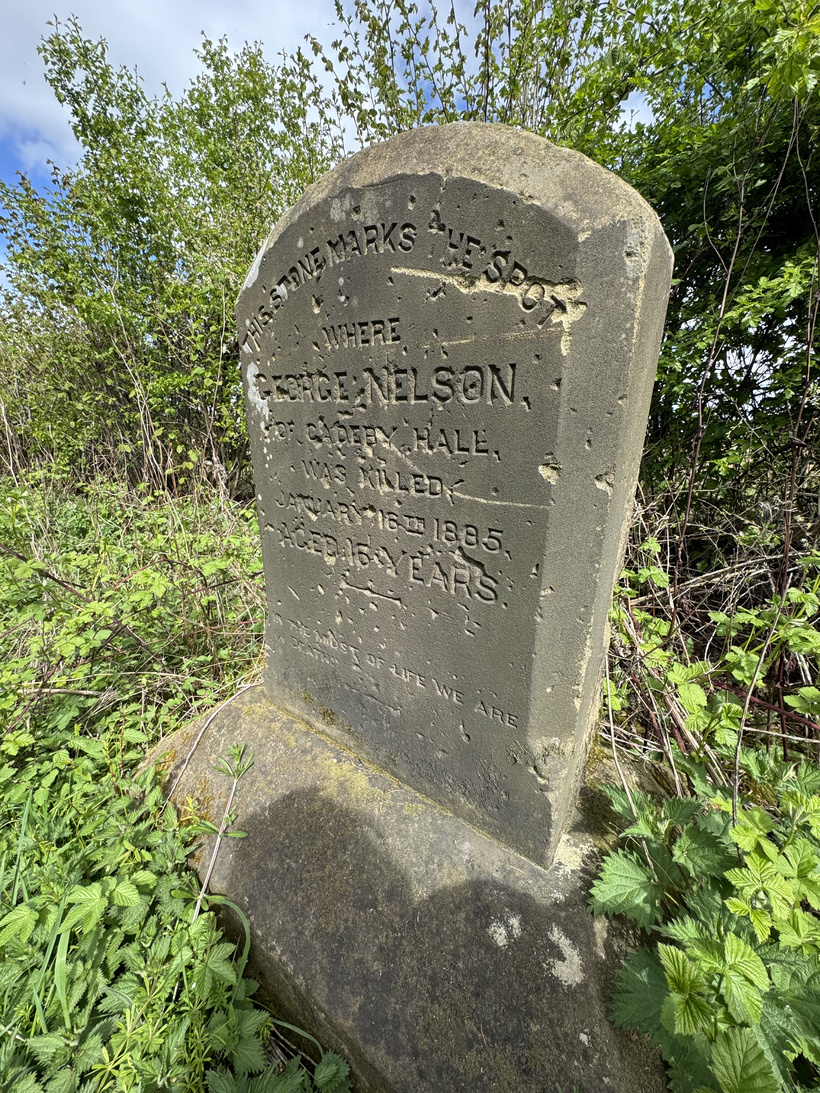
While the stone has been saved, visiting it is no easy task, and that’s without accounting for sudden ghost-based frights. The memorial is located on something of an accident black spot, and squatting nearby isn’t the safest of ideas (see me as a memorial-based guinea pig, if you will). There is similarly no official parking, save for a small patch of ground before the access gate – which is useful, but certainly not a place to linger.
Although we know little of George and his short life, we know he was mourned so deeply that his family installed a marker in remembrance to him, and that he lived on in folk and ghostlore for centuries thereafter. Should you wish to pay your respects at his true, final grave site, his body is interred in the family grave at St Peter’s Churchyard, Great Limber.
***

Liked this post? Then why not join the Patreon clubhouse? From as little as £1 a month, you’ll get access to tonnes of exclusive content and a huge archive of articles, videos and podcasts!
Pop on over, support my work, have a chat and let me show you my skulls…www.patreon.com/burialsandbeyond

Liked this and want to buy me a coffee?
To tip me £3 and help me out with hosting, click the link below!
https://ko-fi.com/burialsandbeyond
***


Leave a comment